
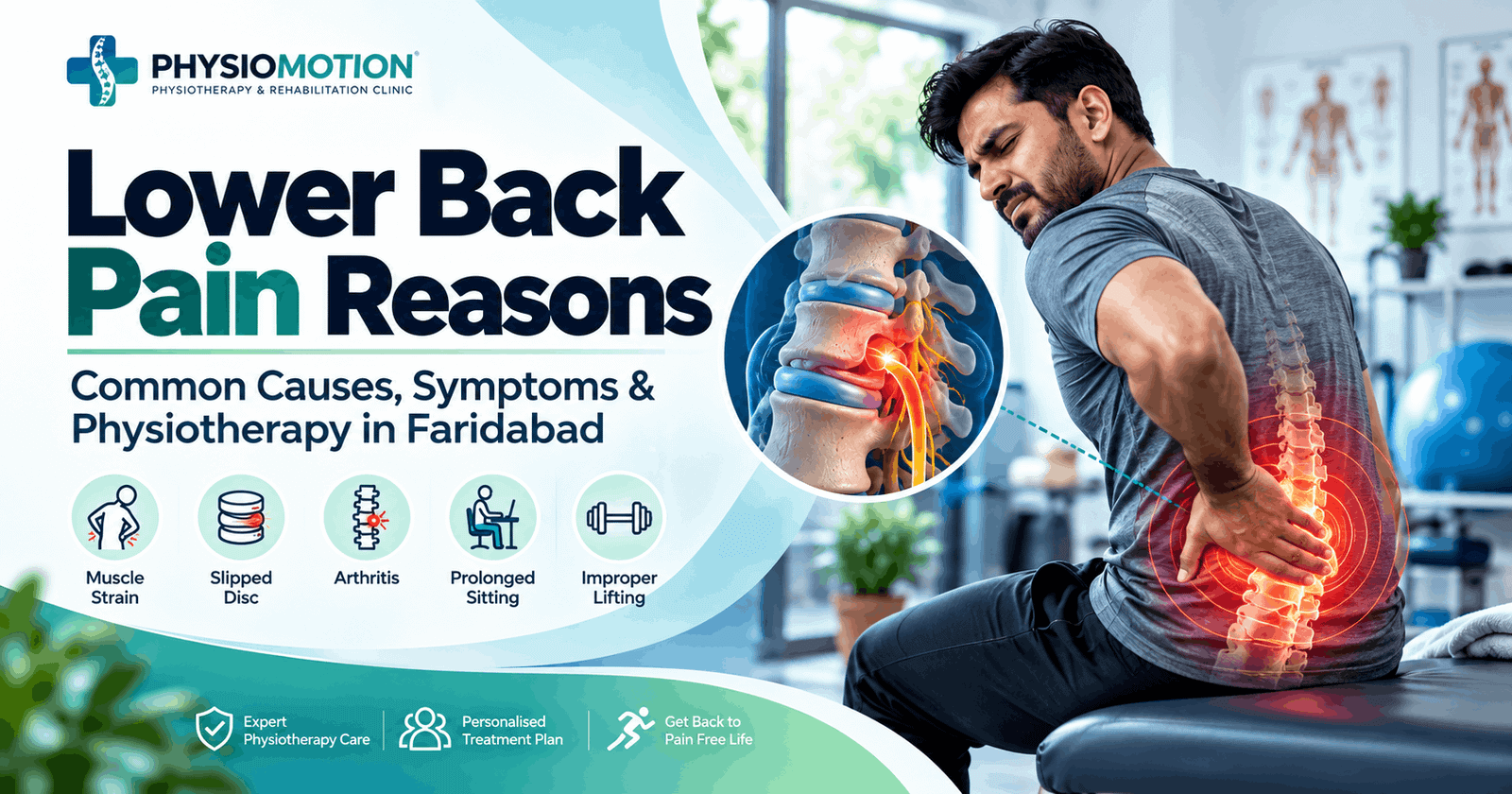
Lower back pain reasons can range from a simple muscle strain to conditions involving spinal discs, joints or nerves. For many people, the pain begins after prolonged sitting, lifting, exercise or an awkward movement, while others cannot identify one specific trigger.
Lower back pain is extremely common, and in many cases it improves with time and appropriate conservative care. However, persistent pain, leg symptoms, weakness or certain warning signs may require a more detailed assessment. The NHS notes that common causes include strains, slipped discs and sciatica, although sometimes the exact cause is not obvious. nhs.uk
At PhysioMotion Physiotherapy & Rehabilitation Clinic in Faridabad, the aim is not simply to reduce pain temporarily. A proper assessment helps identify the factors affecting your movement, strength, mobility and daily function so that rehabilitation can be planned accordingly.
What Are the Most Common Lower Back Pain Reasons?
There is no single cause of lower back pain.
The lower spine contains bones, discs, joints, ligaments, muscles and nerves. Pain can arise when any of these structures become irritated or overloaded. Mayo Clinic identifies muscle or ligament strain, disc problems, arthritis, spinal stenosis and inflammatory conditions among the possible causes of back pain. Mayo Clinic
Below are 9 important lower back pain reasons you should know.
1. Muscle or Ligament Strain
One of the most common lower back pain reasons is strain involving the muscles or ligaments supporting the spine.
This may happen after:
- Lifting something heavy
- Sudden twisting
- Repetitive bending
- Unaccustomed exercise
- Sports activity
- A sudden awkward movement
The pain is often localised to the lower back and may feel aching, tight or sharp during movement.
Mayo Clinic identifies muscle and ligament strain as one of the most frequent mechanical causes of back pain. Mayo Clinic
For persistent musculoskeletal pain, patients may benefit from our Musculoskeletal Rehabilitation in Faridabad service.
2. Prolonged Sitting and Reduced Movement
Long periods of sitting can aggravate lower-back symptoms in some people.
This is especially common among office workers, students, drivers and people who spend several hours working on laptops.
The problem is not simply that sitting is automatically “bad.” Remaining in one position for prolonged periods can reduce movement variability and may increase discomfort in people whose backs are already sensitive.
Regular position changes, walking and appropriate movement can often be useful.
Patients who struggle with sitting posture and workstation-related discomfort can explore our Postural Assessment & Training in Faridabad.
3. Slipped Disc or PIVD
A prolapsed or herniated intervertebral disc is another important cause of lower-back pain.
The discs sit between the vertebrae and act as shock-absorbing structures.
If disc material protrudes or herniates, it may irritate nearby nerve roots.
Symptoms can include:
- Lower-back pain
- Pain radiating into the buttock or leg
- Tingling
- Numbness
- Weakness
- Difficulty sitting for long periods
It is important to understand that not every disc bulge causes pain. Disc changes can sometimes appear on scans in people without significant symptoms. Mayo Clinic
Read our complete guide on PIVD Treatment in Faridabad.
4. Sciatica
Sciatica is another major entry on the list of lower back pain reasons, especially when pain travels down the leg.
Sciatica occurs when the sciatic nerve roots become irritated or compressed.
Symptoms may include:
- Lower-back pain
- Buttock pain
- Shooting leg pain
- Burning sensations
- Tingling
- Numbness
- Leg weakness
Pain may travel below the knee depending on the nerve involved.
The NHS lists sciatica as one of the medical conditions that can cause back pain. nhs.uk
Read our previous guide:
Sciatica Pain: Causes, Symptoms & Physiotherapy in Faridabad
5. Weakness and Reduced Physical Conditioning
Reduced strength and physical conditioning may contribute to recurring back pain in some people.
The muscles around the trunk, hips and lower back help control movement and tolerate the physical demands of everyday activities.
People who suddenly increase activity after being inactive may experience pain because their current physical capacity is lower than the demand being placed on them.
Mayo Clinic identifies lack of exercise and weak back and abdominal muscles as risk factors associated with back pain. Mayo Clinic
A structured rehabilitation programme may include:
- Core strengthening
- Hip strengthening
- Trunk control exercises
- Mobility exercises
- Walking progression
- Functional training
Learn more about our Spinal Rehabilitation in Faridabad programme.
6. Arthritis and Age-Related Changes
Age-related changes in the spine can also contribute to lower-back pain.
Osteoarthritis may affect the joints in the spine.
In some people, arthritis or other degenerative changes can also reduce the space available around the spinal nerves, contributing to spinal stenosis.
Possible symptoms include:
- Back stiffness
- Pain after prolonged standing
- Reduced spinal mobility
- Pain into the buttocks or legs
- Difficulty walking longer distances
Mayo Clinic identifies osteoarthritis and spinal stenosis among recognised causes of back pain. Mayo Clinic
Patients requiring structured rehabilitation may also explore our Orthopedic Rehabilitation in Faridabad service.
7. Improper Lifting or Sudden Overloading
Another one of the common lower back pain reasons is suddenly loading the spine beyond what it is accustomed to.
For example, pain may begin after:
- Lifting heavy furniture
- Picking up weights incorrectly
- Repetitive warehouse work
- Sudden gym training
- Moving heavy boxes
- Lifting while twisting
Improper lifting is recognised as a back-pain risk factor. Mayo Clinic
However, the goal of rehabilitation should not be to make patients afraid of bending or lifting.
Instead, physiotherapy may help gradually improve strength, movement confidence and lifting tolerance.
8. Spinal Stenosis
Spinal stenosis occurs when spaces within the spinal canal or around nerve roots become narrower.
This narrowing may place pressure on nerves.
Symptoms can include:
- Lower-back discomfort
- Leg pain
- Tingling
- Numbness
- Weakness
- Difficulty walking or standing for long periods
Symptoms are often different from a simple muscle strain.
A detailed assessment is important because treatment depends on the underlying presentation and functional limitations.
Our Spinal Rehabilitation service can be useful for patients requiring individualised rehabilitation for spinal conditions
9. Inflammatory or Less Common Medical Causes
Not every case of lower-back pain is mechanical.
Less common lower back pain reasons may include inflammatory or medical conditions such as:
- Ankylosing spondylitis
- Sacroiliitis
- Osteoporosis-related fracture
- Infection
- Kidney-related conditions
- Spinal tumours
These causes are much less common than routine mechanical back pain, but they are important to recognise. Mayo Clinic
This is why persistent or unusual pain should not simply be treated with exercises without proper assessment.
Lower Back Pain Reasons and Symptoms That Suggest Nerve Involvement
Back pain does not always remain limited to the lower spine.
Symptoms suggesting possible nerve involvement may include:
- Pain travelling into the buttock
- Pain extending below the knee
- Tingling
- Pins and needles
- Numbness
- Burning pain
- Muscle weakness
These symptoms may occur with conditions such as disc prolapse or sciatica.
If you are experiencing radiating leg pain, read our detailed Sciatica Pain article.
Lower Back Pain Reasons: When Should You Seek Medical Attention?
Most episodes of back pain are not caused by serious disease.
However, some symptoms require prompt medical assessment.
Seek urgent medical attention if lower-back pain occurs with:
- New bowel or bladder problems
- Significant leg weakness
- Numbness around the groin or saddle region
- Fever
- Severe pain after significant trauma
- Unexplained weight loss
- Rapidly worsening neurological symptoms
Both NHS and Mayo Clinic guidance identify bowel or bladder changes, neurological weakness, fever and significant trauma among important warning signs. nhs.uk
How Are Lower Back Pain Reasons Diagnosed?
A proper assessment is more useful than trying to identify the problem based only on pain location.
A physiotherapy assessment may examine:
- When the pain started
- What movements increase or decrease symptoms
- Sitting and standing tolerance
- Spinal mobility
- Hip mobility
- Muscle strength
- Neurological symptoms
- Reflexes
- Sensation
- Functional activities
- Walking pattern
Depending on the presentation, further medical investigations may sometimes be required.
MRI, X-ray, CT scans or nerve studies are not needed in every case, but they may be recommended when clinically appropriate. Mayo Clinic notes that examination usually starts with movement and functional assessment, with imaging or other tests used when necessary. Mayo Clinic
Can Physiotherapy Help Lower Back Pain?
Yes, physiotherapy can be an important part of managing many common causes of lower-back pain.
Treatment is not simply about applying machines to the painful area.
A rehabilitation programme may include:
- Patient education
- Movement modification
- Mobility exercises
- Strengthening
- Core and trunk training
- Hip strengthening
- Manual therapy where appropriate
- Nerve mobility exercises when indicated
- Posture and ergonomic guidance
- Gradual return to work or exercise
NHS guidance recommends remaining active rather than staying in bed for long periods and includes exercise and physiotherapy among commonly used treatments for persistent back pain. nhs.uk
For persistent symptoms, explore our Chronic Pain Management in Faridabad service.
Why Complete Bed Rest Is Usually Not the Best Approach
When lower-back pain is severe, many people naturally want to lie down and avoid movement.
However, prolonged bed rest is generally not recommended for uncomplicated back pain.
Both NHS and Mayo Clinic advise remaining appropriately active and gradually continuing normal movement where possible. nhs.uk
The correct amount of activity depends on the individual.
The goal is not to force painful movements but to progressively restore comfortable activity.
Lower Back Pain Treatment in Faridabad at PhysioMotion
Understanding lower back pain reasons is important because different causes may require different rehabilitation approaches.
At PhysioMotion Physiotherapy & Rehabilitation Clinic, assessment can include:
- Pain pattern
- Spine mobility
- Muscle strength
- Neurological symptoms
- Movement limitations
- Sitting tolerance
- Walking tolerance
- Functional difficulties
- Daily activity demands
Treatment is then planned according to the patient’s clinical presentation rather than using the same routine for every person.
Explore our complete range of Physiotherapy Services in Faridabad.
You can also learn more about PhysioMotion Physiotherapy & Rehabilitation
Lower Back Pain in Office Workers
People working long hours at desks commonly report lower-back discomfort.
Possible contributing factors include:
- Long sitting periods
- Limited movement
- Sudden increase in workload
- Reduced physical conditioning
- Poor workstation arrangement
- Repetitive postures
Rather than trying to maintain one “perfect posture” all day, changing positions and moving regularly can be more practical.
If desk work is affecting your back, our Postural Assessment & Training service can help identify movement and ergonomic factors.
Lower Back Pain Reasons in Gym-Goers
Gym-related back pain does not necessarily mean the spine has been seriously damaged.
Pain can occur after:
- Sudden increases in training volume
- Heavy deadlifts
- Squats beyond current capacity
- Poor fatigue management
- New exercises
- Lack of progressive loading
- Acute muscle strain
The goal should usually be to identify the aggravating movement, reduce excessive load temporarily and progressively rebuild strength.
Avoid permanently eliminating exercises purely because they once caused pain unless medically necessary.
How to Reduce the Risk of Recurrent Lower Back Pain
No strategy can guarantee that back pain will never occur again.
However, several habits can improve physical capacity and help manage risk.
These include:
- Stay physically active
- Strengthen the trunk and hips
- Increase exercise loads gradually
- Avoid sudden spikes in physical activity
- Change positions regularly
- Use appropriate lifting technique
- Maintain general fitness
- Address persistent symptoms early
Mayo Clinic also lists exercise, maintaining a healthy weight and appropriate lifting as relevant factors in back-pain prevention and risk reduction. Mayo Clinic
Frequently Asked Questions About Lower Back Pain Reasons
What are the most common lower back pain reasons?
Common causes include muscle or ligament strain, disc-related problems, sciatica, arthritis and other mechanical spinal conditions.
Can sitting cause lower back pain?
Long periods of sitting can aggravate symptoms in some people, particularly when movement throughout the day is limited.
Can a slipped disc cause lower back pain?
Yes. A herniated or prolapsed disc can cause back pain and may sometimes irritate a nerve, producing leg pain, tingling or numbness.
Read our guide on PIVD Treatment.
Why does my lower back pain go into my leg?
Pain travelling from the back into the leg may indicate nerve irritation, commonly associated with sciatica.
Is walking good for lower-back pain?
For many people with uncomplicated back pain, remaining active and performing comfortable activities such as walking can be helpful. NHS guidance discourages prolonged bed rest. nhs.uk
Do I need an MRI for lower-back pain?
Not everyone with lower-back pain requires an MRI. Whether imaging is needed depends on symptoms, examination findings and possible warning signs.
Can physiotherapy help chronic lower-back pain?
Physiotherapy may help improve movement, strength and functional capacity in many patients with persistent lower-back pain.
Explore our Chronic Pain Management service.
Looking for Lower Back Pain Treatment in Faridabad?
If lower-back pain is making it difficult to sit, walk, exercise, sleep or perform daily activities, identifying the underlying contributing factors is an important first step.
PhysioMotion provides physiotherapy and rehabilitation for back pain, sciatica, PIVD, musculoskeletal problems and spinal conditions in Faridabad.
You can also read genuine patient experiences on our Reviews page.
For appointments, clinic details or assessment enquiries:
Contact PhysioMotion Physiotherapy & Rehabilitation Clinic
Understanding your lower back pain reasons helps determine what type of management may be most appropriate. Instead of treating every back-pain patient with the same exercises, rehabilitation should be based on symptoms, movement, strength, neurological findings and individual goals.

[…] Lower-back pain: Read Lower Back Pain Reasons: 9 Powerful Causes to Know. […]
[…] Lower Back Pain Reasons: 9 Powerful Causes to Know […]