neck pain causes

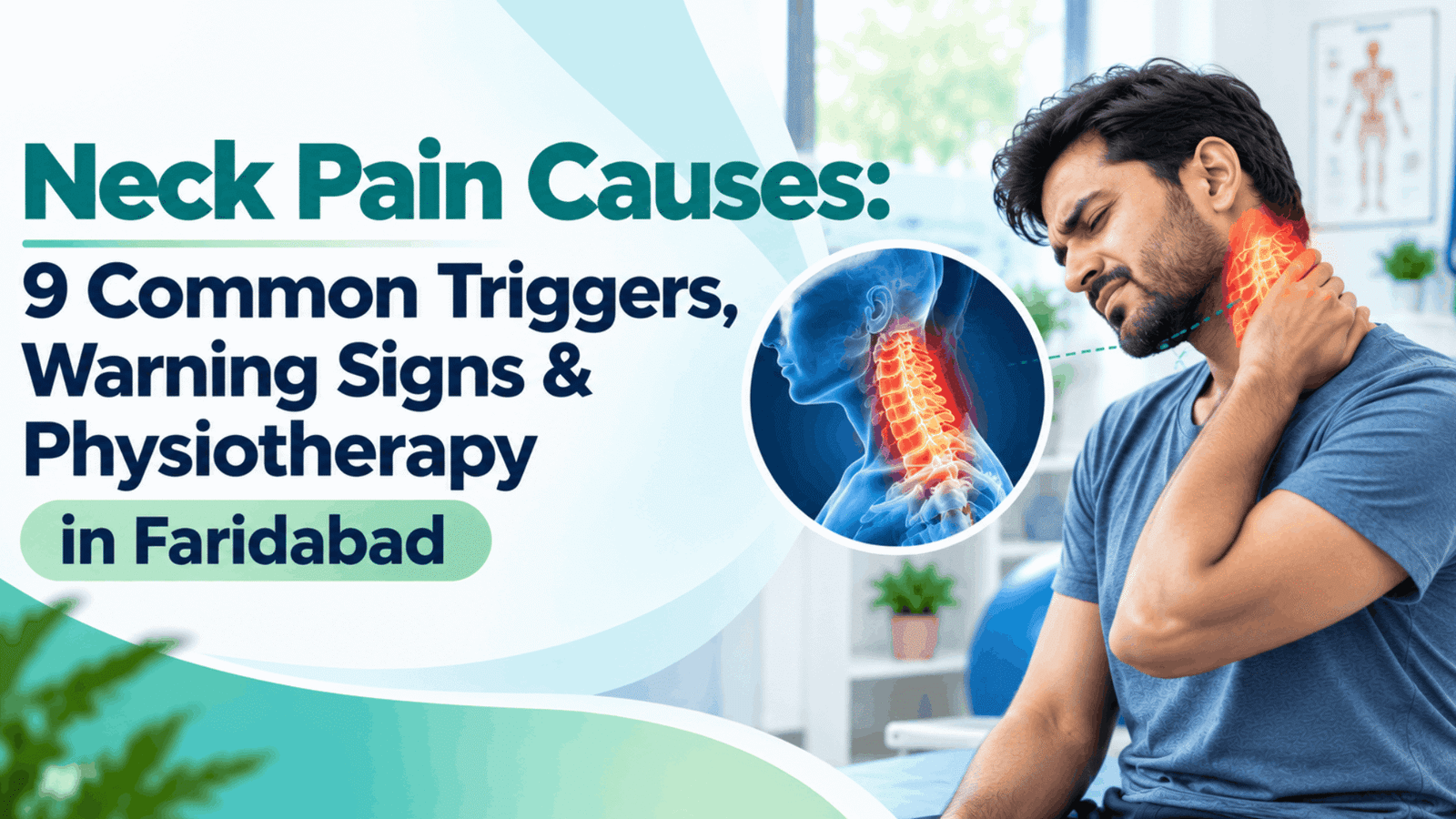
Neck Pain Causes: 9 Common Triggers, Warning Signs & Physiotherapy in Faridabad

Neck pain causes can range from poor posture and muscle tension to cervical spondylosis, disc problems and irritated nerves. If you regularly experience neck stiffness, pain while turning your head, or discomfort spreading towards your shoulders, understanding the underlying reason is the first step towards appropriate treatment.

Neck pain has become increasingly common among people who spend long hours working on computers, using smartphones, driving or sitting in the same position. Even everyday activities, such as sleeping with an uncomfortable pillow or looking down at a phone for extended periods, can contribute to neck discomfort.

However, not every case of neck pain has the same cause. Some people experience temporary muscle tightness, while others may have problems involving the cervical spine, joints or nerves.

At PHYSIOMOTION Physiotherapy & Rehabilitation Clinic in Faridabad, the focus is on understanding a patient’s symptoms, movement limitations and individual needs before planning rehabilitation.

In this guide, we will discuss nine common neck pain causes, symptoms you should not ignore, practical ways to manage discomfort and how physiotherapy may help.

What Are the Most Common Neck Pain Causes?

Your neck, also called the cervical spine, consists of seven vertebrae, intervertebral discs, joints, muscles, ligaments and nerves. These structures work together to support your head and allow you to look up, down and from side to side.

When one or more of these structures becomes irritated, strained or injured, neck pain may develop.

According to the Mayo Clinic’s guide to neck pain causes, common contributors include muscle strain, age-related joint changes, nerve compression, injuries and certain medical conditions.

Here are nine possible causes to understand.

1. Poor Posture and Prolonged Screen Time

Poor posture is one of the most common neck pain causes, particularly among people who work at desks or spend several hours using smartphones.

When you continuously lean your head forward to look at a screen, the muscles around your neck and shoulders must work to support that position. Maintaining the same posture for long periods can contribute to muscle fatigue, stiffness and discomfort.

You may notice symptoms such as:

  • Pain at the back of your neck.
  • Tightness around your shoulders.
  • Discomfort after working on a laptop.
  • Stiffness when getting up from your desk.
  • Headaches associated with neck tension.

This does not mean that one imperfect posture will automatically damage your spine. The duration of a position, lack of movement and your overall physical capacity also matter.

What can help?

Keep your screen at a comfortable height, support your back and change positions regularly. Take short movement breaks throughout the day instead of remaining in the same position for hours.

If neck discomfort keeps returning, a physiotherapist can assess your movement, muscle strength and work-related habits.

2. Muscle Strain and Muscle Tension

Muscle strain is another common explanation for neck pain.

It may occur after an awkward sleeping position, repetitive movements, sudden movements or activities that place more demand on the neck muscles than they are accustomed to handling.

Stress can also contribute to muscle tension. When you feel stressed, you may unconsciously tighten your neck and shoulder muscles, which can aggravate existing discomfort.

Common symptoms include:

  • Localised muscle pain.
  • Tenderness around the neck or shoulders.
  • Stiffness while turning your head.
  • Muscle tightness after prolonged sitting.
  • Discomfort that changes with movement or position.

Mild muscle-related neck pain often improves with appropriate self-care and gradual movement. Persistent or worsening symptoms should be assessed rather than repeatedly ignored.

3. Cervical Spondylosis and Age-Related Changes

Cervical spondylosis refers to age-related changes affecting the discs and joints of the cervical spine.

Over time, spinal discs may lose some of their height and flexibility, and the joints may develop degenerative changes. These findings can sometimes contribute to pain, stiffness or restricted movement.

Possible symptoms include:

  • Neck stiffness, especially after inactivity.
  • Discomfort while turning your head.
  • Pain around the neck and shoulders.
  • Headaches that may be associated with neck discomfort.
  • In some cases, symptoms caused by nerve irritation.

However, age-related changes on an X-ray or MRI do not necessarily mean they are the source of your pain. Some people have visible degenerative changes without significant symptoms.

A proper clinical assessment helps determine whether these findings are relevant to your condition.

If your symptoms involve the neck or other areas of the spine, explore our Spinal Rehabilitation in Faridabad service to learn more about assessment-led rehabilitation.

4. Cervical Disc Problems and Nerve Compression

The discs between the cervical vertebrae help absorb forces and allow movement. Sometimes, a disc may bulge or herniate and irritate a nearby nerve.

When a cervical nerve becomes irritated or compressed, symptoms may extend beyond the neck.

You might experience:

  • Neck pain spreading towards the shoulder.
  • Pain travelling down one arm.
  • Tingling or pins and needles in the hand.
  • Numbness in part of the arm or hand.
  • Muscle weakness in more serious cases.

These symptoms may indicate cervical nerve involvement, but other conditions can produce similar problems.

Do not assume that arm pain or tingling is simply due to poor posture. Persistent, worsening or unexplained neurological symptoms need medical assessment.

For more information about spinal disc problems, you can also read our guide to PIVD Treatment in Faridabad. Although PIVD commonly affects the lower back, disc problems can also occur in the cervical spine.

5. An Awkward Sleeping Position or Unsuitable Pillow

Have you ever woken up with a stiff neck and found it difficult to turn your head?

Your sleeping position may be contributing to the discomfort.

Sleeping with your neck held in an uncomfortable position for several hours can place additional strain on surrounding muscles and joints. A pillow that keeps your head excessively tilted may also contribute to morning stiffness.

You may notice:

  • Neck pain immediately after waking.
  • Difficulty turning your head to one side.
  • Tightness around the upper shoulders.
  • Discomfort that gradually eases as you move.

How can you reduce morning neck stiffness?

Choose a pillow that allows your head and neck to remain reasonably aligned with your body. Avoid forcing your neck into an extreme position while sleeping.

Gentle movement may help if the discomfort is mild. However, severe pain, symptoms following an injury or persistent stiffness should not automatically be attributed to your pillow.

6. Previous Injuries and Whiplash

Neck pain can develop after an accident, fall or sports injury.

Whiplash is an injury commonly associated with a sudden backward and forward movement of the head, such as during some road traffic collisions. This movement can strain the muscles and other soft tissues around the neck.

Symptoms may include:

  • Neck pain and stiffness.
  • Reduced range of movement.
  • Shoulder discomfort.
  • Headaches.
  • Tenderness around the neck.

Symptoms do not always appear immediately after an injury.

Seek prompt medical assessment after a significant accident or fall, especially if you have severe pain, numbness, weakness or difficulty walking. Do not begin forceful neck exercises or manipulation before an injury has been appropriately assessed.

Rehabilitation after an injury should be planned according to the type of injury, symptoms and medical advice.

7. Stress and Poor Recovery Habits

Stress may not be the only reason for neck pain, but it can contribute to the problem.

When you experience prolonged stress, you may hold tension in your neck and shoulders, sleep poorly or become less physically active. These factors can make existing discomfort harder to manage.

You may notice that your neck feels tighter during demanding workdays or after spending several hours in one position.

Helpful habits may include:

  • Taking regular movement breaks.
  • Maintaining a consistent sleep schedule.
  • Performing appropriate physical activity.
  • Using relaxation techniques that work for you.
  • Avoiding prolonged periods of inactivity.

If pain continues despite these changes, a physiotherapy assessment can help identify other contributing factors.

8. Repetitive Activities and Occupational Demands

Some jobs and daily activities require repeated neck movements or prolonged static positions.

For example, office workers, drivers, people working with handheld devices and individuals performing repetitive tasks may experience neck discomfort when their physical demands exceed their current tolerance.

The problem is not necessarily the activity itself. Often, the combination of repetition, duration, limited breaks and inadequate recovery contributes to symptoms.

Consider adjusting your workstation, alternating tasks where possible and taking brief movement breaks.

If your job regularly aggravates your symptoms, an individual assessment can help identify practical modifications without unnecessarily restricting your normal activities.

9. Other Medical Conditions

Although many cases of neck pain are related to muscles, joints, posture or injuries, other medical conditions can also cause neck discomfort.

Examples include inflammatory conditions, infections and, less commonly, serious underlying diseases.

The pattern of symptoms and accompanying signs can help a healthcare professional decide whether further investigation is necessary.

Do not assume that every case of neck pain is caused by mobile phone use or cervical spondylosis. Persistent, unusual or unexplained pain deserves appropriate evaluation.


What Are the Symptoms of Neck Pain?

The symptoms depend on the underlying cause and which structures are involved.

Common symptoms include:

  • Pain at the back or sides of the neck.
  • Stiffness when turning your head.
  • Muscle tightness around the shoulders.
  • Reduced neck movement.
  • Headaches associated with neck discomfort.
  • Pain that increases after prolonged sitting.
  • Discomfort extending towards the shoulder or arm.
  • Tingling, numbness or weakness when nerves are involved.

If you are experiencing several of these symptoms, read our related guide on Cervical Pain Symptoms.

Remember that symptoms alone cannot confirm the exact diagnosis. A clinical assessment is important when pain persists, interferes with daily activities or is accompanied by neurological changes.

When Should You Seek Medical Attention for Neck Pain?

Most neck pain is not caused by a serious condition, but certain symptoms should never be ignored.

Seek emergency medical care if you experience:

  • Severe neck pain following a significant accident or injury.
  • Neck pain accompanied by fever and a severe headache or marked neck stiffness.
  • New or rapidly worsening weakness in an arm or leg.
  • Difficulty walking or a sudden loss of coordination.
  • New loss of bladder or bowel control alongside neurological symptoms.

Seek prompt medical advice if pain spreads into your arm, you develop persistent tingling or numbness, or your symptoms continue to worsen.

The NHS guidance on neck pain and stiffness also recommends medical assessment when symptoms persist or are accompanied by concerning signs.

It is better to identify a potentially serious problem early than to continue self-treatment without knowing the cause.

How Can You Reduce Neck Pain at Home?

If your symptoms are mild and there are no warning signs, some simple adjustments may help you remain comfortable.

1. Change Positions Regularly

Avoid staying in one position for extended periods. Stand up, walk briefly or change your working position throughout the day.

2. Try Appropriate Heat or Cold

A wrapped cold pack may help with some recent injuries, while gentle heat may ease muscle tightness for some people.

Avoid placing ice or very hot objects directly against your skin. If you have reduced skin sensation or a recent injury, seek professional guidance before using these methods.

3. Keep Your Neck Moving Gently

When appropriate, gentle movements within a comfortable range can help prevent unnecessary stiffness.

Do not force a stretch or continue an exercise that causes sharp pain, dizziness, tingling or worsening symptoms.

4. Review Your Workstation

Position your screen so you can look ahead comfortably. Support your back and keep frequently used items within easy reach.

5. Avoid Self-Diagnosing from MRI Reports

An MRI may show changes that are not necessarily responsible for your symptoms. Imaging should be interpreted alongside your medical history and physical examination.

If symptoms are persistent or severe, consult a qualified healthcare professional rather than relying on home remedies alone.

For additional guidance, the Mayo Clinic’s neck pain treatment recommendations discuss physical therapy, appropriate movement and other treatment options.

How Can Physiotherapy Help With Neck Pain?

Physiotherapy can help manage many types of musculoskeletal neck pain, depending on the diagnosis and individual presentation.

At PHYSIOMOTION Physiotherapy & Rehabilitation Clinic in Faridabad, rehabilitation begins with understanding the patient’s symptoms, movement limitations and goals.

The treatment plan may include the following components when clinically appropriate.

1. Detailed Assessment

The physiotherapist may assess neck mobility, muscle strength, posture, shoulder movement and activities that increase or reduce symptoms.

When nerve involvement is suspected, a neurological examination may also be required.

2. Individualised Exercise

Depending on the findings, exercises may focus on improving neck mobility, strengthening relevant muscles and gradually increasing tolerance for daily activities.

Not every patient needs the same exercises. A programme should be adjusted to the person’s condition and response.

3. Postural and Movement Guidance

If your work habits or repeated positions contribute to your symptoms, practical changes may help reduce unnecessary strain.

Explore our Postural Assessment and Training in Faridabad service for more information.

4. Manual Therapy When Appropriate

Hands-on techniques may be used alongside exercise and education for selected patients.

Treatment should be based on clinical findings, and forceful neck manipulation is not appropriate for everyone.

5. Gradual Return to Normal Activities

The aim is not simply to make your neck feel better temporarily. Rehabilitation should also help you return to work, exercise and everyday activities with improved movement and confidence.

The ChoosePT physical therapy resource explains how personalised rehabilitation can support movement, pain management and functional goals.

You can also explore PHYSIOMOTION’s Chronic Pain Management in Faridabad service if persistent pain is affecting your daily life.

Neck Pain Physiotherapy in Faridabad and Delhi NCR

If neck pain is affecting your sleep, work, driving or everyday activities, the first step is to understand what may be causing it.

At PHYSIOMOTION Physiotherapy & Rehabilitation Clinic, we provide assessment-led physiotherapy and rehabilitation for people experiencing neck pain, spinal problems, movement restrictions and other musculoskeletal conditions.

Our approach focuses on understanding the individual’s symptoms and developing a rehabilitation plan suited to their needs.

If you are searching for neck pain physiotherapy in Faridabad, our team can assess your condition and advise whether physiotherapy is appropriate or whether further medical evaluation is needed.

Learn more about PHYSIOMOTION and our physiotherapy approach or visit our contact page to book an assessment.

PHYSIOMOTION Physiotherapy & Rehabilitation Clinic
Shop No. 6, Adore Samriddhi, Piyush Heights, Sector 89, Faridabad, Haryana.

Call: +91 98124 60558

Your treatment should be based on an appropriate assessment, not guesswork.

Frequently Asked Questions About Neck Pain Causes

1. What are the most common neck pain causes?

Common causes include muscle strain, prolonged screen use, awkward sleeping positions, age-related cervical spine changes, injuries and nerve irritation. The exact cause depends on your symptoms and clinical findings.

2. Can mobile phone use cause neck pain?

Yes. Looking down at a phone for extended periods may increase the demand on your neck muscles and contribute to discomfort. Taking breaks, changing positions and holding your phone at a comfortable height may help.

3. Can cervical spondylosis cause neck and shoulder pain?

Yes. Cervical spondylosis can contribute to neck stiffness and pain that may extend towards the shoulders. However, similar symptoms can occur for other reasons, so a proper assessment is important.

4. When should I worry about neck pain?

Seek emergency care for severe pain after a significant injury, neck pain with fever and severe headache, or new neurological problems such as marked weakness or difficulty walking. Persistent pain, tingling or numbness also warrants medical assessment.

5. Can physiotherapy help with neck pain?

Physiotherapy may help many people with musculoskeletal neck pain through appropriate exercises, movement guidance, education and selected hands-on techniques. The treatment plan depends on the cause and severity of symptoms.

6. How long does neck pain take to improve?

Mild muscle-related neck pain may improve over days or a few weeks. Recovery varies depending on the cause, severity, general health and treatment. Persistent or worsening pain should be assessed.

7. Where can I get neck pain physiotherapy in Faridabad?

PHYSIOMOTION Physiotherapy & Rehabilitation Clinic provides physiotherapy and rehabilitation in Sector 89, Faridabad. You can contact the clinic to discuss your symptoms and arrange an assessment.


Conclusion

Understanding neck pain causes can help you make better decisions about your health. Poor posture, muscle strain, cervical spondylosis, disc problems and nerve irritation are some possible explanations, but the right approach depends on identifying what is contributing to your symptoms.

Simple changes to your daily routine may help with mild discomfort. However, persistent pain, worsening symptoms or neurological warning signs should not be ignored.

At PHYSIOMOTION, our focus is on understanding your condition and helping you work towards better movement and function through an appropriate rehabilitation plan.

Experiencing recurring neck pain? Contact PHYSIOMOTION Physiotherapy & Rehabilitation Clinic in Faridabad to arrange an assessment.

Pain relief for severe knee arthritis

Pain Relief for Severe Knee Arthritis: 7 Powerful Ways

Pain relief for severe knee arthritis starts with understanding what is causing your pain, how much your knee movement is affected and which treatments are suitable for your condition. Severe knee arthritis can make walking, climbing stairs, standing for long periods and even getting out of bed uncomfortable. However, the right combination of medical care, physiotherapy and daily activity management may help reduce symptoms and improve mobility.

At PHYSIOMOTION Physiotherapy & Rehabilitation Clinic, Faridabad, we understand how persistent knee pain can affect everyday life. Whether you experience stiffness in the morning, swelling after walking or difficulty standing from a chair, a personalised treatment plan can help you work towards better movement and function.

In this guide, we explain seven practical approaches to managing severe knee arthritis, when to seek professional help and how physiotherapy may support your recovery.

What Is Severe Knee Arthritis?

Knee arthritis is a condition in which the structures of the knee joint become damaged or inflamed, leading to pain, stiffness and reduced movement. Osteoarthritis is one of the most common forms. It involves changes to the cartilage and other joint structures over time.

As the condition progresses, everyday activities may become increasingly difficult. However, the severity of symptoms does not always correspond directly to what appears on an X-ray. Your symptoms, physical examination and ability to perform daily activities all matter when deciding on treatment.

Common symptoms include:

  • Pain while walking, standing or climbing stairs
  • Stiffness after sitting or resting
  • Swelling around the knee
  • Difficulty bending or straightening the leg
  • A grinding or clicking sensation during movement
  • Reduced walking distance and balance
  • Pain that interferes with sleep or daily activities

If knee pain is affecting your independence, an assessment can help identify appropriate treatment options rather than relying on temporary relief alone.

7 Powerful Ways to Get Pain Relief for Severe Knee Arthritis

1. Start With a Proper Knee Assessment

The first step is understanding your individual condition. Knee pain can result from osteoarthritis, an injury, inflammation or other joint problems. These conditions may require different approaches.

A physiotherapist may assess your knee movement, muscle strength, swelling, walking pattern, balance and ability to perform everyday tasks. Your medical history and any previous imaging may also be relevant.

At PHYSIOMOTION, treatment planning focuses on your symptoms, physical capacity and recovery goals. This helps determine which movements and exercises are appropriate for you.

2. Follow a Personalised Physiotherapy Exercise Programme

Appropriately selected exercise is one of the main non-surgical treatments for knee osteoarthritis. Although movement may initially cause some discomfort, a carefully progressed programme can improve muscle strength and physical function over time.

Depending on your condition, a physiotherapist may recommend:

  • Quadriceps strengthening
  • Gentle knee mobility exercises
  • Hamstring strengthening
  • Hip and gluteal muscle exercises
  • Balance and functional training
  • Gradual walking or other low-impact activity

The exercises should match your current ability. If your knee is severely painful or swollen, the programme may need to begin with gentler movements and progress gradually.

Avoid copying intense exercise routines from the internet without checking whether they are suitable for your condition.

3. Manage Body Weight if Appropriate

For people who are overweight, gradual weight loss can help reduce the load placed on the knee joints. Even a modest reduction in body weight may improve mobility and help manage symptoms.

A sustainable approach is generally more useful than crash dieting. Focus on balanced nutrition, appropriate physical activity and realistic goals.

If walking is difficult, a physiotherapist or medical professional can help you identify activities that are more comfortable and suitable for your physical capacity.

4. Modify Activities Without Becoming Completely Inactive

When arthritis pain becomes severe, it is natural to avoid movement. However, prolonged inactivity can contribute to muscle weakness, stiffness and reduced physical capacity.

Instead, adjust activities to your current tolerance.

For example:

  • Break long periods of standing into shorter intervals.
  • Take regular movement breaks when sitting.
  • Use a handrail when climbing stairs.
  • Choose comfortable, supportive footwear.
  • Avoid repeatedly pushing through sharp or rapidly worsening pain.
  • Build activity gradually according to your symptoms.

The goal is to balance activity and recovery rather than stopping all movement.

5. Use Pain-Management Strategies Safely

Pain-management options may include appropriate medication, activity modification and supportive measures recommended by your healthcare professional.

A clinician may discuss topical anti-inflammatory medicines or other treatment options depending on your medical history, other medications and individual risks. Do not start, combine or increase pain medicines without appropriate advice, particularly if you have kidney, stomach or cardiovascular problems.

Heat may help some people with stiffness, while a wrapped cold pack may provide short-term relief for swelling. Protect your skin and avoid applying extreme temperatures directly.

These measures may help manage symptoms, but they do not replace a comprehensive treatment plan.

6. Improve Strength, Balance and Everyday Movement

Severe arthritis can affect more than the knee itself. Pain may change the way you walk, stand or distribute your weight, sometimes placing additional demands on other parts of the body.

Rehabilitation may therefore include hip strengthening, balance exercises, gait training and functional movements such as sitting down and standing up.

Your physiotherapist may also discuss whether a walking aid is appropriate. A walking stick or other support can sometimes make movement safer and more manageable.

At PHYSIOMOTION, our orthopedic rehabilitation services in Faridabad focus on improving movement and function through an individualised rehabilitation approach.

7. Discuss Advanced Treatment Options When Necessary

Exercise and physiotherapy can help manage symptoms, but they are not guaranteed to eliminate pain or reverse advanced joint damage.

If severe pain continues to interfere with sleep, walking or quality of life despite appropriate treatment, consult an orthopaedic specialist about additional options.

Depending on your condition, a specialist may discuss medication, injections in selected cases or knee replacement surgery. The decision should consider your symptoms, examination findings, general health, personal goals and response to non-surgical treatment.

Knee replacement is not automatically necessary simply because an X-ray shows arthritis. Equally, someone should not have to endure disabling symptoms indefinitely without discussing further treatment.

For patients preparing for surgery or recovering afterward, PHYSIOMOTION also provides pre and post-surgery rehabilitation in Faridabad.

Can Physiotherapy Help With Severe Knee Arthritis?

Yes, physiotherapy can be an important part of managing knee osteoarthritis, although the results vary from person to person.

A suitable programme may help improve muscle strength, joint movement, walking ability, balance and confidence during daily activities. Treatment may also include education about activity modification, exercise progression and strategies for managing flare-ups.

Physiotherapy does not regrow lost cartilage or guarantee a pain-free knee. Its purpose is to help you manage symptoms and maintain the best possible level of physical function.

At PHYSIOMOTION Physiotherapy & Rehabilitation Clinic, treatment is planned according to your assessment, symptoms and goals. If you are searching for physiotherapy in Faridabad, our team can help you understand suitable rehabilitation options for your condition.

You can also explore our chronic pain management services for further information about an assessment-led approach to persistent pain.

When Should You Seek Medical Attention?

Do not assume that every episode of knee pain is caused by arthritis.

Seek urgent medical assessment if your knee becomes suddenly very painful, hot, red or significantly swollen, particularly if you also have a fever or feel unwell. These symptoms may indicate an infection or another condition requiring prompt treatment.

You should also seek medical advice after a significant injury, if you cannot bear weight on the leg, or if the knee becomes locked or markedly unstable.

Persistent pain that is getting worse, disturbing your sleep or substantially limiting daily activities also deserves professional assessment.

Where Can You Get Pain Relief for Severe Knee Arthritis in Faridabad?

If arthritis is affecting your ability to walk, work or enjoy everyday activities, a personalised assessment can help you understand your options.

PHYSIOMOTION Physiotherapy & Rehabilitation Clinic provides physiotherapy and rehabilitation in Sector 89, Faridabad. Led by Dr. Deeksha Choudhary, BPT, MPT (Orthopaedics), the clinic focuses on assessment-led care, individualised exercise and functional rehabilitation.

Our approach is designed around your current abilities, symptoms and goals rather than using the same programme for every patient.

Clinic: PHYSIOMOTION Physiotherapy & Rehabilitation Clinic
Address: Shop No. 6, Adore Samriddhi, Piyush Heights, Sector 89, Faridabad, Haryana 121014
Phone: +91 98124 60558

If you are looking for physiotherapy near you in Faridabad, contact the clinic to discuss an assessment and determine whether physiotherapy is appropriate for your condition.

Frequently Asked Questions

What is the best pain relief for severe knee arthritis?

There is no single best treatment for everyone. A combination of tailored exercise, appropriate activity modification, weight management when needed and medically advised pain relief may help. Severe or persistent symptoms should be assessed by a healthcare professional.

Can severe knee arthritis improve without surgery?

Many people manage their symptoms without surgery through exercise, physiotherapy, lifestyle changes and appropriate medical treatment. However, advanced arthritis with persistent disabling symptoms may require a discussion about knee replacement.

Should I walk if I have severe knee arthritis?

Walking may be helpful when it is tolerated, but the distance and intensity should suit your condition. If walking causes substantial pain, marked swelling or instability, seek professional guidance about alternative activities and safe progression.

Which exercises are suitable for severe knee arthritis?

Depending on your symptoms, exercises may include gentle knee mobility, quadriceps strengthening, hip strengthening and low-impact aerobic activity. A physiotherapist can adjust the exercises to your pain level, strength and mobility.

When should I consider knee replacement?

Consider discussing knee replacement with an orthopaedic specialist when pain, stiffness or reduced function substantially affects your quality of life and non-surgical treatments are ineffective or unsuitable. The decision should be made through an individual clinical assessment.

Take the First Step Towards Better Knee Movement

Severe knee arthritis can make everyday life challenging, but appropriate treatment may help you manage pain, maintain strength and move with greater confidence.

The best starting point is to understand your condition and choose a treatment plan that fits your needs. With appropriate medical guidance, personalised physiotherapy and consistent activity management, many people can improve their day-to-day function.

Contact PHYSIOMOTION Physiotherapy & Rehabilitation Clinic in Faridabad to discuss an assessment and explore suitable rehabilitation options.

Medical disclaimer: This article is for educational purposes only and is not a substitute for an individual medical diagnosis or treatment plan.

pain behind knee

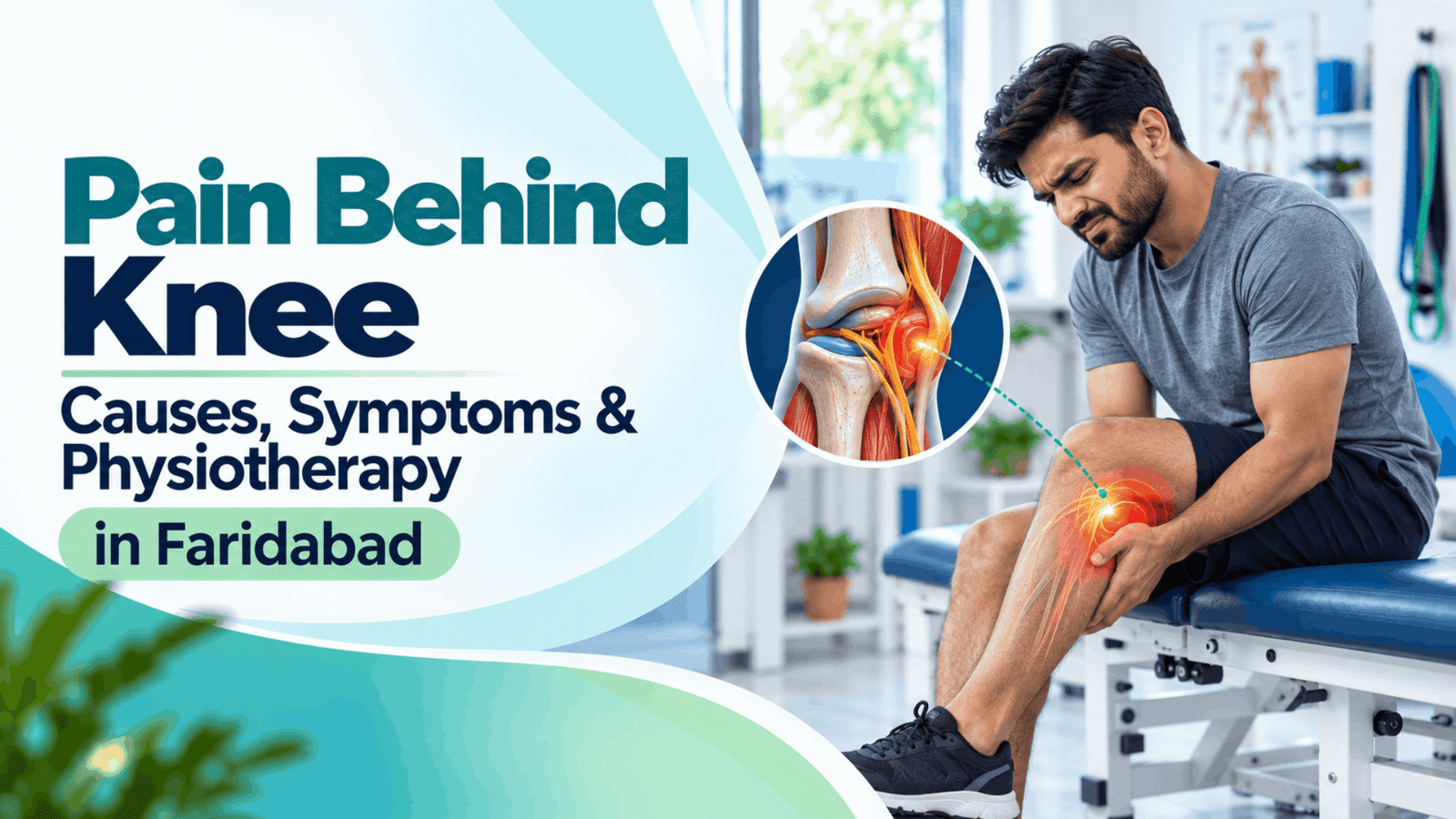
Pain Behind Knee: Causes, Symptoms & Physiotherapy in Faridabad

Pain behind knee can develop for many reasons, ranging from muscle or tendon irritation to a Baker’s cyst, arthritis, meniscus injury or other knee problems.

For some people, the discomfort appears only while bending the knee, walking or exercising. Others may notice stiffness, swelling, tightness or a lump behind the knee.

The location of pain can provide useful clues, but pain behind knee should not be diagnosed based on location alone.

Cleveland Clinic notes that common causes of pain at the back of the knee include tendon or ligament injuries, arthritis, Baker’s cysts and tight muscles.

At PhysioMotion Physiotherapy & Rehabilitation Clinic in Faridabad, assessment focuses on the cause of symptoms, knee movement, muscle strength, swelling, walking ability and functional limitations before a rehabilitation plan is selected.

What Does Pain Behind Knee Mean?

The area behind the knee is called the popliteal region.

Several structures pass through or around this area, including:

  • Hamstring tendons
  • Calf muscles
  • Ligaments
  • Joint capsule
  • Nerves
  • Blood vessels
  • Bursa and fluid-filled structures

Because multiple structures are located in a small area, pain behind knee can have more than one possible explanation.

The pain may feel:

  • Dull or aching
  • Tight
  • Sharp
  • Burning
  • Throbbing
  • Stiff
  • Tender

Some people also experience swelling or difficulty fully straightening or bending the knee.

9 Powerful Causes of Pain Behind Knee

1. Baker’s Cyst

A Baker’s cyst is one of the most recognised causes of pain behind knee.

It is a fluid-filled swelling that develops at the back of the knee, often because another knee problem causes excess joint fluid.

Common underlying problems include:

  • Osteoarthritis
  • Rheumatoid arthritis
  • Meniscus injury
  • Other joint irritation

Symptoms may include:

  • A lump behind the knee
  • Tightness
  • Knee pain
  • Stiffness
  • Difficulty bending
  • Swelling

Mayo Clinic explains that Baker’s cysts often occur when knee conditions such as arthritis or cartilage injuries cause excess synovial fluid to collect behind the joint.

Cleveland Clinic similarly notes that these cysts can cause pain, stiffness and reduced knee bending.

2. Hamstring Tendon Irritation

The hamstring muscles run along the back of the thigh and attach close to the knee.

Overuse, sudden loading or repetitive activity may irritate the hamstring tendons.

This may cause:

  • Pain behind the knee
  • Pain during running
  • Pain during bending
  • Tightness in the back of the thigh
  • Tenderness near the tendon

Athletes, runners and gym-goers may be more likely to notice this type of problem after changes in training load.

For exercise-related knee conditions, patients can explore PhysioMotion’s Sports Injury Rehabilitation in Faridabad service. PhysioMotion’s current programme includes strength, mobility, balance and sport-specific rehabilitation for knee and lower-limb injuries.

3. Meniscus Injury

The menisci are cartilage structures inside the knee that help distribute load and improve joint stability.

A meniscus tear may happen after:

  • Twisting
  • Sudden direction changes
  • Squatting
  • Sports injuries
  • Degenerative changes

Symptoms can include:

  • Knee pain
  • Swelling
  • Clicking
  • Locking
  • Difficulty bending
  • Pain around the joint line

Depending on the location of the tear, discomfort may be felt toward the back of the knee.

Mayo Clinic lists meniscus tears among injuries that can cause swelling and pain around the knee.

PhysioMotion’s Orthopedic Rehabilitation in Faridabad service includes meniscus problems, knee conditions, joint pain and rehabilitation after meniscus surgery.

4. Knee Osteoarthritis

Osteoarthritis can also cause pain behind knee, especially when joint inflammation or swelling is present.

Knee osteoarthritis occurs when cartilage within the joint gradually deteriorates.

Symptoms may include:

  • Knee pain
  • Stiffness
  • Swelling
  • Reduced mobility
  • Pain while walking
  • Difficulty climbing stairs

Osteoarthritis can also contribute to the development of a Baker’s cyst behind the knee. Cleveland Clinic identifies arthritis as one of the common causes of posterior knee pain and Baker’s cyst formation.

For long-standing joint pain, PhysioMotion offers Chronic Pain Management in Faridabad, which includes persistent knee pain, arthritis and osteoarthritis among the conditions treated.

5. Calf Muscle Strain

The gastrocnemius muscle crosses the back of the knee.

A strain may occur during:

  • Running
  • Jumping
  • Sudden acceleration
  • Sports
  • Heavy exercise
  • Sudden stretching

Pain may be felt in the upper calf and behind the knee.

Symptoms can include:

  • Sharp pain
  • Tenderness
  • Tightness
  • Difficulty walking
  • Pain when pushing off the foot

A physical examination helps distinguish muscle-related symptoms from joint-related problems.

6. Ligament Injury

Knee ligaments help control stability.

Ligament injuries can occur during:

  • Sports
  • Falls
  • Twisting
  • Sudden stops
  • Direct impact

Posterior cruciate ligament problems in particular may produce discomfort deeper in the knee or toward the back.

Other symptoms may include:

  • Swelling
  • Instability
  • Difficulty walking
  • Reduced range of motion

Sports-related ligament injuries often require structured rehabilitation to restore strength and stability.

PhysioMotion’s Sports Injury Rehabilitation programme includes balance, proprioception, movement correction and progressive strengthening for knee injuries.

7. Tight Calf or Hamstring Muscles

Muscle tightness can sometimes contribute to pain behind knee, particularly after prolonged inactivity, repetitive activity or sudden increases in exercise.

Tightness may make the knee feel:

  • Restricted
  • Stiff
  • Uncomfortable while bending
  • Tight while walking

However, simply stretching is not always the answer.

The reason for the tightness should first be considered, especially if symptoms persist or are associated with swelling or weakness.

PhysioMotion’s Musculoskeletal Rehabilitation in Faridabad programme focuses on restoring movement, strength and functional capacity for muscle, joint and soft-tissue conditions.

8. Knee Joint Swelling

Fluid buildup within the knee can create pressure and discomfort toward the back of the joint.

Possible causes include:

  • Injury
  • Arthritis
  • Meniscus tear
  • Overuse
  • Infection
  • Bursitis

Mayo Clinic notes that swollen knees can result from ligament injuries, meniscus tears, overuse, arthritis and other conditions.

A swollen knee should be assessed if the swelling is substantial, persistent or associated with heat, redness or fever.

9. Deep Vein Thrombosis (DVT)

Most pain behind knee is musculoskeletal, but one important condition should not be missed.

Deep vein thrombosis is a blood clot that develops in a deep vein, usually in the leg.

Possible symptoms include:

  • Leg pain
  • Swelling
  • Warmth
  • Tenderness
  • Skin colour changes

Mayo Clinic explains that DVT can cause leg pain or swelling and may become dangerous if part of the clot travels to the lungs.

This is one reason sudden pain and swelling behind the knee or calf should not automatically be treated as a muscle problem.

Pain Behind Knee When Bending

Pain behind knee when bending can occur with several conditions.

Common possibilities include:

  • Baker’s cyst
  • Meniscus irritation
  • Joint swelling
  • Muscle or tendon tightness
  • Arthritis

A Baker’s cyst in particular may create a feeling of pressure or tightness when the knee bends fully.

The NHS notes that Baker’s cyst symptoms can include difficulty bending the knee, stiffness and pain that may become worse after walking.

Pain Behind Knee When Straightening the Leg

Some people feel discomfort when fully straightening the knee.

This may happen because extension increases tension or pressure around structures at the back of the knee.

Possible causes include:

  • Baker’s cyst
  • Hamstring tendon irritation
  • Calf muscle problems
  • Joint inflammation
  • Meniscus injury

Mayo Clinic notes that Baker’s cyst pain may worsen when fully straightening or bending the knee.

Pain Behind Knee When Walking

Pain behind knee while walking can be associated with:

  • Arthritis
  • Tendon problems
  • Baker’s cyst
  • Muscle strain
  • Joint swelling

The way pain behaves is important.

For example, a physiotherapist may ask whether symptoms appear:

  • Immediately
  • After several minutes of walking
  • While climbing stairs
  • When walking downhill
  • After prolonged standing

These details can help guide assessment.

Pain Behind Knee With Swelling

Swelling changes the picture.

Pain plus swelling may occur with:

  • Baker’s cyst
  • Arthritis
  • Meniscus injury
  • Ligament injury
  • Joint irritation

But sudden swelling and pain can also occur with DVT.

Mayo Clinic advises seeking medical care when pain and swelling behind the knee could represent a blood clot.

Pain Behind Knee With a Lump

A lump behind the knee commonly raises suspicion for a Baker’s cyst.

The NHS describes a Baker’s cyst as a soft, fluid-filled lump at the back of the knee.

However, a new unexplained lump should be medically assessed rather than self-diagnosed.

Cleveland Clinic recommends evaluation because other conditions can sometimes cause similar symptoms.

When Is Pain Behind Knee Serious?

Most cases are not emergencies.

However, seek urgent medical attention if pain behind knee occurs with:

  • Sudden significant swelling
  • Calf swelling
  • Warmth or redness
  • Severe unexplained pain
  • Inability to bear weight
  • Significant trauma
  • Fever
  • Chest pain
  • Shortness of breath

The NHS specifically warns that sudden leg swelling, warmth and colour changes may indicate a ruptured Baker’s cyst or DVT, while chest pain or breathlessness with leg symptoms may indicate pulmonary embolism.

Mayo Clinic also identifies DVT as a potentially serious condition because a clot can travel to the lungs.

How Is Pain Behind Knee Diagnosed?

A proper diagnosis begins with assessment.

A physiotherapist or doctor may evaluate:

  • Where the pain is located
  • When symptoms began
  • Swelling
  • Knee range of motion
  • Muscle strength
  • Walking pattern
  • Tenderness
  • Stability
  • Previous injuries
  • Clicking or locking
  • Functional limitations

Depending on the findings, imaging may sometimes be needed.

For suspected Baker’s cyst or other deeper problems, investigations may include:

  • Ultrasound
  • X-ray
  • MRI

Mayo Clinic notes that Baker’s cyst evaluation can involve ultrasound, X-ray or MRI when necessary.

Can Physiotherapy Help Pain Behind Knee?

Physiotherapy can help many musculoskeletal causes of pain behind knee, but treatment depends on the underlying condition.

A personalised rehabilitation plan may include:

  • Pain and swelling management
  • Knee mobility exercises
  • Hamstring strengthening
  • Quadriceps strengthening
  • Calf strengthening
  • Hip strengthening
  • Balance training
  • Walking retraining
  • Movement correction
  • Gradual return to exercise

For example, Cleveland Clinic notes that physical therapy may be recommended for Baker’s cysts associated with arthritis or injury, particularly to strengthen muscles around the knee.

Treatment should not be based solely on where the pain is located.

Physiotherapy for Pain Behind Knee in Faridabad

At PhysioMotion, pain behind knee is assessed according to the patient’s symptoms and movement limitations.

The assessment may consider:

  • Knee mobility
  • Muscle strength
  • Swelling
  • Balance
  • Walking
  • Sports demands
  • Daily activities
  • Previous injuries

PhysioMotion’s current Orthopedic Rehabilitation in Faridabad service covers knee conditions, arthritis, meniscus problems, ligament injuries and joint stiffness.

PhysioMotion provides individualised physiotherapy in Faridabad led by assessment rather than using one standard treatment routine for every patient.

Pain Behind Knee After Exercise or Sports

Athletes commonly experience posterior knee discomfort after:

  • Running
  • Squats
  • Lunges
  • Jumping
  • Sprinting
  • Sudden direction changes

Possible causes may include muscle strain, tendon irritation, ligament problems or meniscus injury.

The correct response is not always complete rest.

Depending on the injury, rehabilitation may involve temporarily reducing aggravating load and gradually rebuilding:

  • Strength
  • Mobility
  • Balance
  • Control
  • Running tolerance
  • Sport-specific capacity

PhysioMotion’s Sports Injury Rehabilitation in Faridabad programme is designed around these goals.

Pain Behind Knee After Knee Replacement

Some people may experience stiffness, swelling or discomfort during recovery after a knee operation.

Post-operative symptoms need to be interpreted according to:

  • Stage of healing
  • Surgical procedure
  • Swelling
  • Range of motion
  • Muscle strength
  • Surgeon instructions

PhysioMotion’s current post-surgery programme specifically includes total knee replacement, meniscus repair, ligament reconstruction and other orthopedic procedures.

Pain Behind Knee in Older Adults

In older adults, pain behind knee may be associated with:

  • Osteoarthritis
  • Reduced joint mobility
  • Baker’s cyst
  • Muscle weakness
  • Reduced activity

Rehabilitation may therefore need to address more than pain alone.

Treatment may include:

  • Strengthening
  • Balance training
  • Walking training
  • Mobility
  • Functional exercises

PhysioMotion’s Geriatric Rehabilitation in Faridabad programme focuses on mobility, strength, balance, walking and functional independence in older adults.

Frequently Asked Questions About Pain Behind Knee

What is the most common cause of pain behind knee?

There is no single cause. Baker’s cyst, arthritis, tendon or muscle problems and knee injuries are common possibilities.

Can a Baker’s cyst cause pain behind knee?

Yes. A Baker’s cyst develops behind the knee and can cause pain, swelling, tightness and stiffness.

Why does the back of my knee hurt when I bend it?

Possible causes include Baker’s cyst, meniscus problems, joint swelling, muscle tightness or tendon irritation.

Can arthritis cause pain behind knee?

Yes. Knee arthritis can cause joint pain and swelling and can also contribute to the development of a Baker’s cyst.

Can a meniscus tear cause posterior knee pain?

A meniscus injury can cause knee pain, swelling, clicking or locking, and some tears may produce discomfort toward the back of the knee.

When should I worry about pain behind knee?

Seek prompt medical assessment if there is sudden swelling, warmth, redness, severe calf pain or unexplained symptoms. Chest pain or difficulty breathing with leg pain or swelling requires emergency medical attention because of possible pulmonary embolism.

Can physiotherapy help pain behind knee?

Yes, when the cause is musculoskeletal and physiotherapy is appropriate. Treatment may include mobility, strengthening, balance, activity modification and functional rehabilitation.

Where can I get physiotherapy for pain behind knee in Faridabad?

PhysioMotion Physiotherapy & Rehabilitation Clinic provides assessment-led orthopedic, musculoskeletal, sports injury and pain rehabilitation in Sector 89, Faridabad.

Get Pain Behind Knee Assessed at PhysioMotion

Persistent pain behind knee should not automatically be treated as simple muscle tightness.

The correct approach depends on whether symptoms originate from a muscle or tendon, the knee joint, a Baker’s cyst, arthritis, meniscus injury or another condition.

At PhysioMotion Physiotherapy & Rehabilitation Clinic, assessment focuses on pain, knee movement, strength, swelling, balance, walking and functional limitations before deciding on an appropriate rehabilitation plan.

You can read patient experiences on the PhysioMotion Reviews page or contact the clinic to book an assessment in Faridabad.

Reviews:
https://physiomotionrehab.com/reviews/

Contact:
https://physiomotionrehab.com/contact-us/

This article is educational and does not replace individual medical diagnosis or emergency medical care.

knee replacement in faridabad

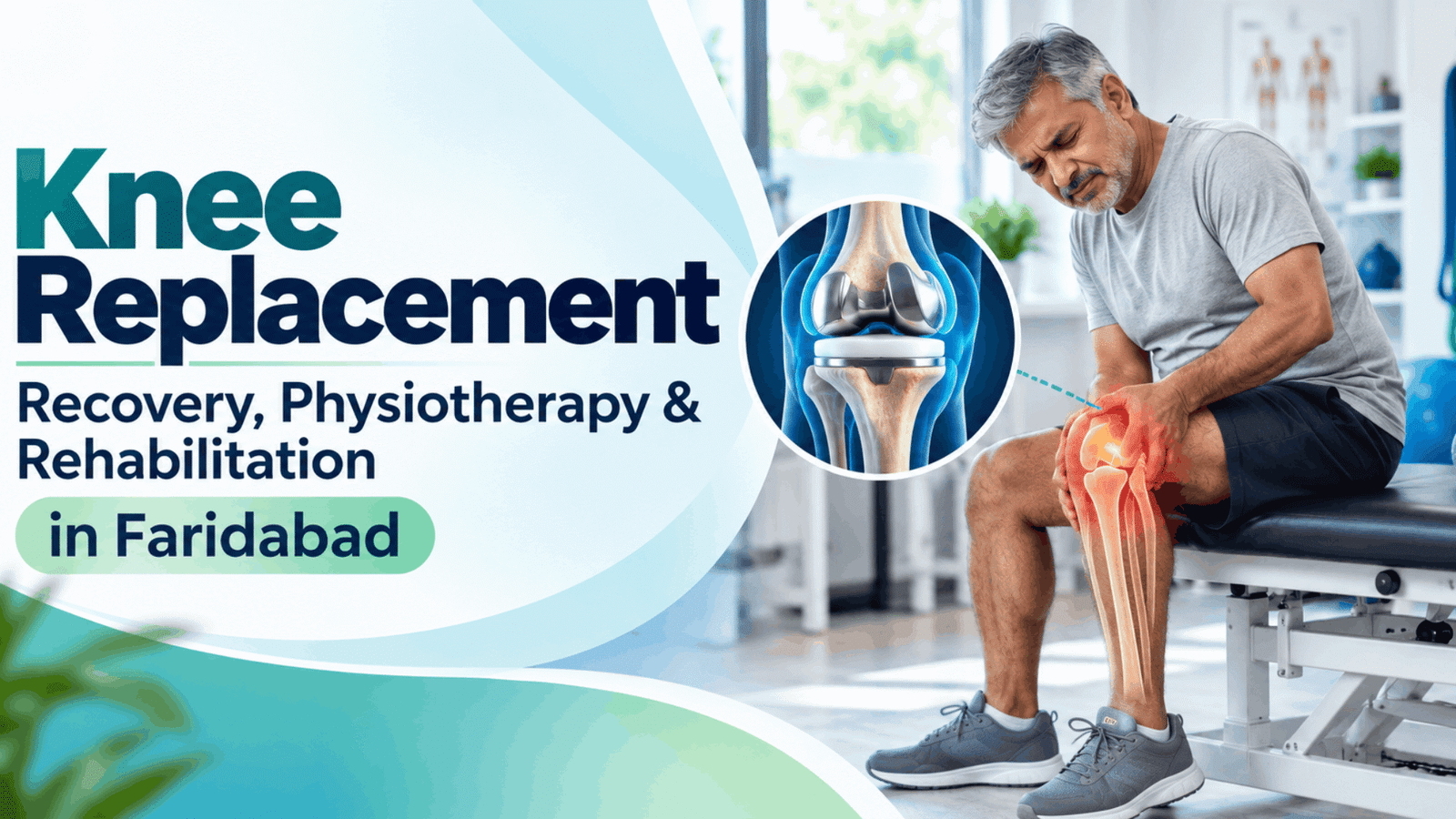
Knee Replacement: Recovery, Physiotherapy & Rehabilitation in Faridabad

Knee replacement surgery can reduce severe knee pain and improve mobility when significant joint damage makes walking, climbing stairs or performing everyday activities difficult. However, surgery is only one part of the recovery process. Regaining knee movement, strength, balance and walking ability usually requires a structured rehabilitation programme.

Also called knee arthroplasty, the procedure replaces damaged portions of the knee joint with artificial components. Osteoarthritis is one of the most common reasons people undergo this operation. Mayo Clinic explains that damaged bone and cartilage are replaced with metal and plastic components to improve joint function and relieve pain.

At PhysioMotion Physiotherapy & Rehabilitation Clinic in Faridabad, rehabilitation after surgery is based on the individual patient’s healing stage, surgeon’s instructions, mobility, strength, swelling and functional goals. PhysioMotion’s existing post-operative rehabilitation programme specifically includes total knee replacement recovery.

What Is Knee Replacement?

A knee replacement is an orthopedic procedure performed when damaged parts of the knee joint are replaced with artificial components.

The operation may involve replacing the entire joint or only the damaged portion.

The main types include:

  • Total knee replacement
  • Partial knee replacement
  • Revision knee replacement

During total knee arthroplasty, damaged surfaces of the femur and tibia are removed and replaced with artificial components. A plastic spacer helps create a smoother surface between the replacement parts.

The goal is not simply to replace the joint. The aim is to improve pain, mobility and everyday function.

Why Is Knee Replacement Surgery Done?

Severe osteoarthritis is one of the most common reasons for surgery.

Other situations may include:

  • Advanced knee arthritis
  • Significant joint degeneration
  • Severe knee pain affecting daily activities
  • Difficulty walking
  • Difficulty climbing stairs
  • Reduced knee movement
  • Joint deformity
  • Certain severe injuries
  • Persistent symptoms despite conservative treatment

Mayo Clinic notes that surgeons assess factors such as knee movement, stability and strength when determining whether surgery may be appropriate.

Before surgery is considered, many patients may have already tried conservative management such as medication, activity modification, injections or physiotherapy.

Patients with persistent knee or joint problems can also explore PhysioMotion’s Orthopedic Rehabilitation in Faridabad service.

Knee Replacement and Osteoarthritis

Knee osteoarthritis gradually affects the cartilage and other structures within the joint.

Symptoms may include:

  • Knee pain
  • Stiffness
  • Swelling
  • Reduced movement
  • Difficulty standing from a chair
  • Difficulty climbing stairs
  • Reduced walking tolerance

Not every person with osteoarthritis needs surgery.

Physical therapy may help improve strength, mobility and function in many people with knee osteoarthritis and may help some individuals delay surgery.

When symptoms become severe and significantly affect quality of life despite conservative management, knee replacement may be considered by an orthopedic surgeon.

9 Powerful Steps in Knee Replacement Recovery

Successful recovery is usually progressive rather than immediate.

1. Start Rehabilitation Early

After knee replacement, movement often begins relatively early according to the surgeon’s instructions and the patient’s medical condition.

A physiotherapist may initially help the patient:

  • Sit safely
  • Stand
  • Transfer from bed to chair
  • Walk using a walker or crutches
  • Begin simple knee exercises

NHS guidance states that patients are usually helped to begin walking soon after surgery, initially using crutches or a walking frame.

PhysioMotion provides dedicated Pre & Post-Surgery Rehabilitation in Faridabad for patients recovering from total knee replacement and other orthopedic procedures.

2. Control Pain and Swelling

Pain and swelling are expected during the early stages of recovery.

Excessive swelling can make knee movement more difficult and may affect walking and muscle activation.

Management may involve:

  • Medication prescribed by the medical team
  • Elevation
  • Appropriate cold therapy
  • Compression where advised
  • Gentle movement
  • Activity modification

The exact approach should follow instructions provided by the surgeon and rehabilitation team.

3. Restore Knee Range of Motion

One major goal after knee replacement is gradually restoring the ability to bend and straighten the knee.

Range-of-motion exercises may include controlled knee bending and extension exercises.

The American Physical Therapy Association notes that early rehabilitation commonly focuses on restoring knee bending and straightening while managing swelling and walking ability.

Progress should be individualised rather than forcing the knee aggressively.

4. Rebuild Quadriceps Strength

The quadriceps muscles at the front of the thigh often become weaker after surgery.

These muscles play an important role in:

  • Walking
  • Standing
  • Climbing stairs
  • Controlling the knee
  • Rising from a chair

A rehabilitation programme may progressively include quadriceps exercises, hip strengthening and lower-limb strengthening.

PhysioMotion’s Musculoskeletal Rehabilitation in Faridabad programme also focuses on restoring mobility, strength and functional movement.

5. Improve Walking Pattern

Many people use a walker or crutches early after surgery.

As strength and confidence improve, patients may gradually progress to less support when medically appropriate.

Walking rehabilitation may address:

  • Step length
  • Weight transfer
  • Knee movement during walking
  • Balance
  • Use of walking aids
  • Confidence

The NHS notes that walking aids are commonly used initially and are gradually reduced as patients become more confident.

6. Improve Balance

Reduced movement before surgery and weakness afterwards may affect balance.

Balance exercises can help improve:

  • Stability
  • Weight shifting
  • Confidence
  • Walking on different surfaces
  • Fall prevention

This can be especially important in older adults.

PhysioMotion’s Geriatric Rehabilitation in Faridabad programme includes walking, balance and functional training and specifically lists hip and knee replacement recovery among the conditions it supports.

7. Practise Functional Activities

Rehabilitation after knee replacement should eventually move beyond basic exercises.

Patients need to regain the movements required in everyday life, including:

  • Getting out of bed
  • Standing from a chair
  • Walking independently
  • Using stairs
  • Entering and exiting a vehicle
  • Performing household activities

APTA guidance highlights functional training as an important stage of rehabilitation after total knee arthroplasty.

8. Progress Strength Gradually

As healing progresses, exercise difficulty can gradually increase.

Later rehabilitation may include:

  • Sit-to-stand exercises
  • Step-ups
  • Controlled squats
  • Resistance exercises
  • Balance work
  • Walking progression
  • Endurance training

The programme should reflect the patient’s age, medical history, current strength and goals.

9. Return Safely to Normal Activities

The final goal of knee replacement rehabilitation is not simply achieving a certain knee angle.

Recovery should help patients return to meaningful activities such as:

  • Independent walking
  • Household activities
  • Work
  • Shopping
  • Travel
  • Recreational exercise

Low-impact activities such as walking, swimming and cycling are commonly used after recovery, whereas high-impact activities may not be appropriate for everyone. Mayo Clinic advises discussing long-term activity choices with the healthcare team.

Why Physiotherapy Is Important After Knee Replacement

Surgery replaces damaged joint surfaces, but it does not automatically restore:

  • Strength
  • Balance
  • Mobility
  • Walking mechanics
  • Endurance
  • Confidence

This is why physiotherapy forms an important part of knee replacement recovery.

APTA states that physical therapists help patients regain movement and function after total knee arthroplasty through individualised programmes involving mobility, strengthening, balance and functional training.

PhysioMotion’s post-operative rehabilitation approach includes pain and swelling management, range-of-motion exercises, strengthening, gait training, balance training and functional rehabilitation.

Knee Replacement Physiotherapy in Faridabad

At PhysioMotion, knee replacement physiotherapy in Faridabad begins with an assessment of the patient’s current stage of recovery.

Assessment may include:

  • Pain
  • Swelling
  • Knee movement
  • Muscle strength
  • Walking ability
  • Balance
  • Use of walking aids
  • Functional independence
  • Surgeon-imposed precautions

Treatment is then progressed according to recovery rather than giving every patient the same exercise programme.

Learn more about PhysioMotion’s complete range of physiotherapy services in Faridabad.

What Happens During Knee Replacement Physiotherapy?

A typical rehabilitation programme may involve several components.

Range-of-Motion Training

Controlled bending and straightening exercises help restore knee mobility.

Muscle Strengthening

Exercises may target:

  • Quadriceps
  • Hamstrings
  • Gluteal muscles
  • Calf muscles
  • Hip stabilisers

Walking Training

The physiotherapist may help the patient progress from a walker to crutches or a stick and eventually independent walking when appropriate.

Balance Training

Balance exercises can help reduce instability and improve movement confidence.

Functional Training

Exercises may practise real-life activities such as:

  • Standing from a chair
  • Stair climbing
  • Walking
  • Getting into a car
  • Household movements

PhysioMotion’s Orthopedic Rehabilitation programme specifically includes total knee replacement recovery, gait training, mobility exercises, strength work and functional rehabilitation.

How Long Does Knee Replacement Recovery Take?

There is no identical recovery timeline for every patient.

Recovery depends on:

  • Age
  • General health
  • Type of surgery
  • Strength before surgery
  • Knee mobility before surgery
  • Medical conditions
  • Surgical healing
  • Rehabilitation participation

The NHS states that full recovery can take several months or longer and that individual recovery varies according to health and other factors.

Patients should therefore avoid comparing their progress too closely with someone else’s.

Knee Replacement Recovery Timeline

The following is a general guide only, not a fixed schedule.

Early Stage

The early phase commonly focuses on:

  • Pain and swelling control
  • Safe transfers
  • Walking with assistance
  • Knee bending and straightening
  • Muscle activation

Following Weeks

Rehabilitation may increasingly focus on:

  • Improving range of motion
  • Strengthening
  • Balance
  • Walking quality
  • Stair practice

Later Recovery

Treatment may progress toward:

  • Greater walking endurance
  • Functional independence
  • Stronger lower limbs
  • Normal daily activities
  • Low-impact recreational exercise

Your surgeon’s protocol should always take priority.

Can Physiotherapy Start Before Knee Replacement?

Yes, when medically appropriate.

Physiotherapy before surgery is often called prehabilitation or prehab.

It may help patients:

  • Improve strength
  • Maintain joint mobility
  • Practise exercises
  • Learn to use walking aids
  • Prepare the home environment
  • Understand what to expect after surgery

APTA reports that physical therapists can help prepare patients before total knee replacement by improving strength and flexibility and teaching them how to use assistive devices.

PhysioMotion also provides pre-surgical rehabilitation as part of its Pre & Post-Surgery Rehabilitation service.

What Should You Avoid After Knee Replacement?

Restrictions depend on the surgeon and recovery stage.

During early recovery, patients may be advised to avoid activities such as:

  • Twisting suddenly on the operated leg
  • Heavy lifting
  • High-impact exercise
  • Returning to demanding activities too soon
  • Ignoring weight-bearing restrictions

The NHS also advises patients to follow physiotherapy exercises and surgical guidance closely during recovery.

Never use a generic online exercise programme as a replacement for your surgeon’s specific precautions.

When Should You Contact Your Medical Team?

Certain symptoms after knee replacement need prompt medical attention.

Contact the surgeon or medical team if you develop symptoms such as:

  • Increasing wound redness
  • Discharge from the incision
  • Fever
  • Rapidly increasing swelling
  • Severe calf pain
  • Sudden shortness of breath
  • Chest pain
  • Severe or worsening pain

Knee replacement surgery carries recognised risks including infection and blood clots, so unusual or worsening symptoms should not be ignored.

Knee Replacement Rehabilitation for Older Adults

Many people undergoing knee arthroplasty are older adults.

Rehabilitation may therefore need to address more than the operated knee.

Some patients also need help improving:

  • Overall strength
  • Balance
  • Walking confidence
  • Endurance
  • Transfers
  • Fall prevention

PhysioMotion’s Geriatric Rehabilitation programme includes knee replacement recovery alongside balance, gait and mobility training.

Knee Replacement and Persistent Pain

Most patients undergo surgery to improve pain and function, but recovery is not always completely linear.

Some people may continue experiencing pain, stiffness or reduced confidence for longer than expected.

Persistent symptoms should be assessed rather than assuming that more aggressive exercises are always the answer.

PhysioMotion also provides Chronic Pain Management in Faridabad for patients experiencing persistent pain and reduced function following surgery or long-term musculoskeletal conditions.

Why Choose PhysioMotion for Knee Replacement Rehabilitation in Faridabad?

PhysioMotion provides personalised rehabilitation based on clinical assessment rather than using one standard protocol for every patient.

The clinic’s existing post-operative and orthopedic programmes include rehabilitation for total knee replacement, joint replacement recovery, gait problems, weakness and restricted movement.

PhysioMotion is led by Dr. Deeksha Choudhary, BPT, MPT (Orthopaedics) and focuses on musculoskeletal care, postoperative rehabilitation and geriatric rehabilitation.

Learn more about the clinic and its approach to rehabilitation. About PhysioMotion

Related PhysioMotion Guides

Building strong internal linking around related musculoskeletal and rehabilitation topics can help both users and Google understand the relationship between your content.

Useful related articles include:

This helps strengthen the overall rehabilitation and orthopedic topical cluster on the website.

Frequently Asked Questions About Knee Replacement

Is physiotherapy necessary after knee replacement?

Physiotherapy is commonly an important part of knee replacement recovery because it helps restore movement, muscle strength, walking ability, balance and functional independence.

How soon can I walk after knee replacement?

Many patients begin supported walking soon after surgery, depending on their health, surgical procedure and medical instructions. A walker or crutches may initially be required.

How long does knee replacement recovery take?

Recovery varies. The NHS notes that full recovery may take several months or longer depending on factors such as age and overall health.

Can physiotherapy begin before surgery?

Yes. Prehabilitation may improve strength, mobility and familiarity with the exercises and walking aids used after surgery.

Can I climb stairs after surgery?

Patients are often gradually taught stair climbing as strength and mobility improve. The exact timing depends on the surgeon’s instructions and individual recovery.

Can I exercise after a knee replacement?

Yes, but activity should be gradually progressed. Low-impact activities are commonly preferred after recovery, while higher-impact exercise may need to be avoided or discussed with your surgeon.

Where can I get knee replacement physiotherapy in Faridabad?

PhysioMotion Physiotherapy & Rehabilitation Clinic provides personalised pre- and post-operative rehabilitation in Sector 89, Faridabad, including rehabilitation after total knee replacement.

Start Your Knee Replacement Recovery at PhysioMotion

A successful knee replacement journey does not end when surgery is completed.

Recovering mobility, strength, balance and independence requires gradual rehabilitation that respects the healing process and the surgeon’s instructions.

At PhysioMotion Physiotherapy & Rehabilitation Clinic, post-operative rehabilitation is planned around your current movement, strength, pain, swelling and functional goals.

Read genuine patient experiences on the PhysioMotion Reviews page or contact PhysioMotion to book a physiotherapy assessment in Faridabad.

This article is for educational purposes and does not replace personalised advice from your orthopedic surgeon, physician or physiotherapist.

cervical pain symptoms

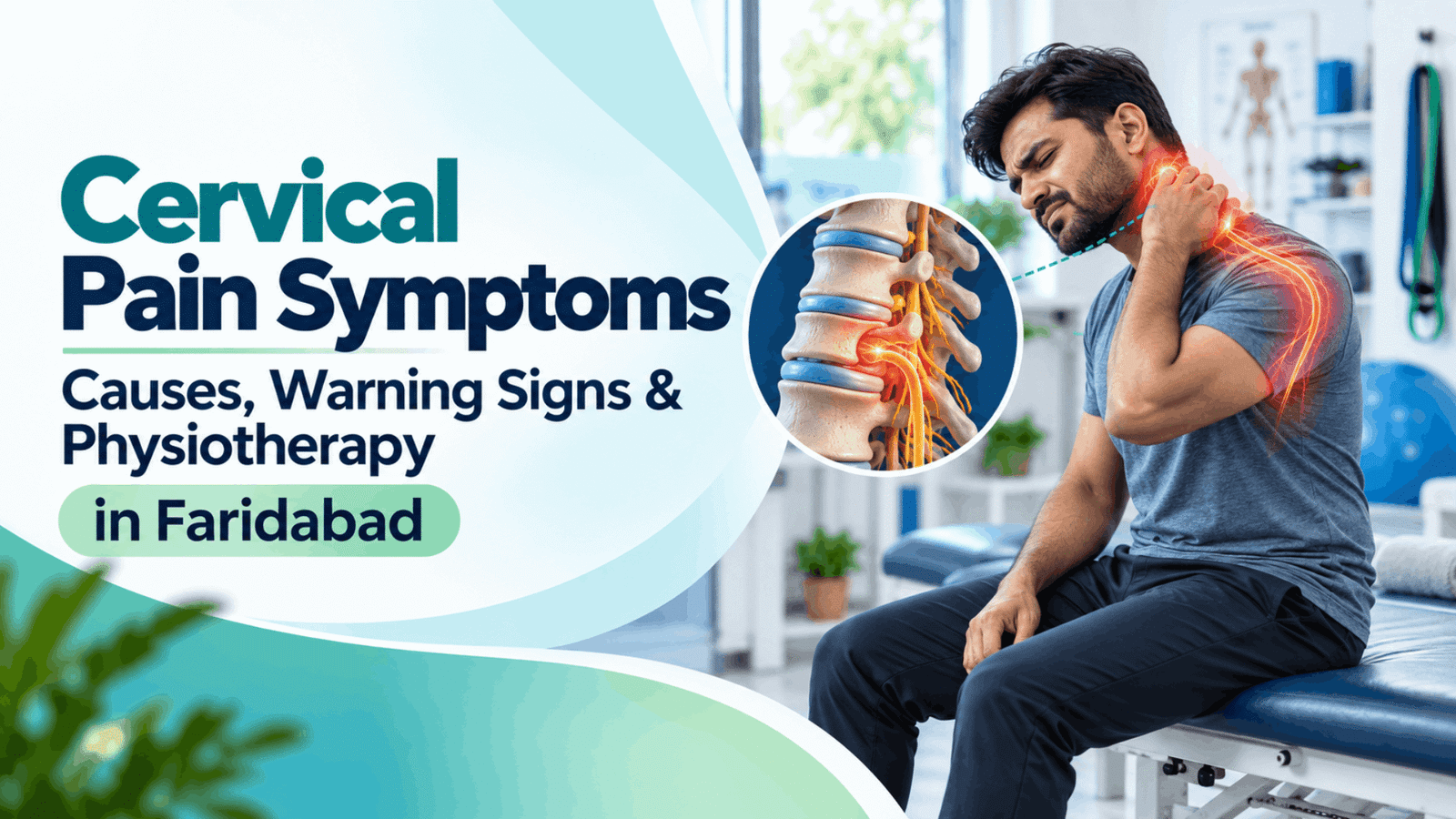
Cervical Pain Symptoms: Causes, Warning Signs & Physiotherapy in Faridabad

Cervical pain symptoms can range from mild neck stiffness and muscle tightness to pain that travels into the shoulder, arm or hand. Some people experience headaches or difficulty turning their neck, while others may develop tingling, numbness or weakness when a cervical nerve is irritated.

The cervical spine is the upper section of your spine and contains seven vertebrae. Muscles, joints, discs, ligaments and nerves in this area work together to support your head and allow neck movement.

When one or more of these structures become irritated, overloaded or compressed, neck-related symptoms may develop.

Neck pain can arise from muscle strain, reduced movement, degenerative changes, injury or nerve irritation. When a cervical nerve root becomes compressed or irritated, symptoms can extend from the neck into the shoulder, shoulder blade, arm or hand. Choose PT

At PhysioMotion Physiotherapy & Rehabilitation Clinic in Faridabad, cervical and neck problems are assessed according to pain behaviour, mobility, muscle strength, neurological signs and their effect on daily activities.

What Are Cervical Pain Symptoms?

Cervical pain symptoms are not limited to pain directly behind the neck.

Depending on the underlying problem, symptoms may include:

  • Neck pain
  • Neck stiffness
  • Restricted neck movement
  • Shoulder or shoulder-blade pain
  • Pain travelling into the arm
  • Tingling or pins and needles
  • Numbness in the arm or hand
  • Headaches associated with neck problems
  • Muscle spasms
  • Arm or hand weakness

The American Physical Therapy Association notes that irritated cervical nerves can produce pain extending into the upper back, shoulder, arm or hand and may also cause weakness. Choose PT

Patients experiencing these symptoms can also learn about PhysioMotion’s Spinal Rehabilitation in Faridabad program, which specifically covers neck pain, cervical spondylosis and disc-related spinal problems.

9 Cervical Pain Symptoms You Should Know

1. Neck Pain

One of the most obvious cervical pain symptoms is discomfort in the neck itself.

The pain may feel:

  • Dull
  • Aching
  • Sharp
  • Throbbing
  • Burning
  • Stabbing

It may be present on one side or both sides of the neck.

Some people notice pain only during movement, while others experience discomfort even while sitting or resting.

Neck pain can result from several factors, including muscular irritation, joint problems, disc-related conditions and nerve involvement. Choose PT

2. Neck Stiffness and Reduced Movement

Difficulty turning or bending the neck is another common symptom.

You may notice difficulty:

  • Looking over your shoulder
  • Looking upward
  • Turning while driving
  • Bending your head sideways
  • Moving after prolonged sitting

Muscular guarding and joint stiffness can contribute to restricted movement.

PhysioMotion’s live spinal rehabilitation program includes mobility and flexibility exercises where clinically appropriate to help restore movement around the neck, spine and surrounding areas. PhysioMotion

3. Pain Around the Shoulder or Shoulder Blade

Not all cervical pain symptoms remain directly in the neck.

Pain can spread into the:

  • Upper trapezius
  • Shoulder
  • Shoulder blade
  • Upper back
  • Upper arm

This can sometimes make a cervical problem feel like a shoulder problem.

A clinical assessment is therefore useful when pain involves both the neck and shoulder region.

For broader muscle and joint rehabilitation, see PhysioMotion’s Musculoskeletal Rehabilitation in Faridabad service.

4. Pain Travelling Down the Arm

Pain that starts around the neck and travels into the arm deserves attention because it can indicate irritation of a cervical nerve root.

This condition is called cervical radiculopathy.

The pain may travel from the neck into the shoulder, shoulder blade, upper arm, forearm or hand depending on the involved nerve.

Mayo Clinic describes cervical radiculopathy as pain that commonly radiates from the neck down the arm and may sometimes involve the shoulder or shoulder blade. Mayo Clinic Orthopedics

Radiating pain is therefore one of the more important cervical pain symptoms to assess properly.

5. Tingling or Pins and Needles

A compressed or irritated cervical nerve can cause abnormal sensations.

These may feel like:

  • Tingling
  • Pins and needles
  • Electric sensations
  • Burning
  • Altered sensation

Symptoms may extend into the arm, hand or fingers.

Different cervical nerve roots supply different regions of the arm and hand, which means the location of tingling can help clinicians understand which nerve may be involved. Choose PT

6. Numbness in the Arm or Hand

Numbness can occur when nerve signalling is affected.

It may involve:

  • Shoulder region
  • Upper arm
  • Forearm
  • Thumb
  • Fingers
  • Hand

For example, the APTA guide explains that C6, C7 and C8 nerve-root involvement can produce different patterns of altered sensation in the hand and fingers. Choose PT

Persistent or worsening numbness should not simply be ignored.

When symptoms involve neurological function, PhysioMotion also provides Neurological Rehabilitation in Faridabad for conditions where neurological rehabilitation is clinically appropriate.

7. Weakness in the Shoulder, Arm or Hand

Weakness is one of the more significant cervical pain symptoms, particularly when it appears alongside pain, tingling or numbness.

You might notice:

  • Difficulty lifting your arm
  • Reduced grip strength
  • Difficulty holding objects
  • Dropping things
  • Weakness while pushing or pulling
  • Reduced hand coordination

Mayo Clinic notes that cervical radiculopathy can produce weakness in the arm or hand and may cause difficulty lifting or holding objects. Mayo Clinic Orthopedics

Progressively worsening weakness warrants medical assessment rather than relying only on home exercises.

8. Headache Associated With Neck Problems

Some headaches can be associated with structures in the neck.

These headaches may be accompanied by:

  • Neck stiffness
  • Restricted neck movement
  • Upper-neck discomfort
  • Pain associated with prolonged posture

However, headaches have many possible causes.

A headache should not automatically be assumed to originate from the cervical spine.

Persistent, severe, unusual or sudden headaches require appropriate medical evaluation.

9. Muscle Tightness or Spasm

Muscles around the neck and shoulders may become tight or painful.

Common areas include:

  • Upper trapezius
  • Levator scapulae
  • Muscles along the cervical spine
  • Shoulder-blade muscles

Muscle spasms are recognised among the signs that may accompany neck pain. Choose PT

This can make turning the head uncomfortable and may interfere with work, driving or sleeping.

For persistent musculoskeletal symptoms, patients can explore Chronic Pain Management in Faridabad.

Cervical Pain Symptoms and Their Common Causes

Understanding cervical pain symptoms is easier when you understand what may be producing them.

Several conditions can affect the cervical spine.

Cervical Muscle Strain

Muscles around the neck can become irritated after:

  • Sudden movement
  • Unaccustomed exercise
  • Long working hours
  • Repeated movements
  • Heavy lifting
  • Sleeping in an uncomfortable position

Pain from muscular irritation is often associated with stiffness and movement-related discomfort.

Cervical Spondylosis

Cervical spondylosis describes age-related degenerative changes affecting structures in the cervical spine.

These changes do not necessarily cause symptoms in everyone.

When symptomatic, a person may experience neck pain, stiffness or nerve-related symptoms depending on the structures involved.

PhysioMotion specifically includes cervical spondylosis among the conditions addressed through its spinal rehabilitation service. PhysioMotion

Cervical Disc Herniation

Intervertebral discs sit between the vertebrae.

If cervical disc material protrudes or herniates and irritates a nearby nerve root, symptoms can extend from the neck into the arm.

Disc herniation is one recognised cause of cervical radiculopathy. Choose PT

You can also read PhysioMotion’s existing guide to PIVD Treatment and Disc Recovery to understand disc-related spinal problems in greater detail.

Cervical Radiculopathy

Cervical radiculopathy occurs when a cervical nerve root becomes compressed or irritated.

Common symptoms include:

  • Neck pain
  • Arm pain
  • Tingling
  • Numbness
  • Weakness

The exact pattern depends on which nerve root is involved. Choose PT

Cervical Pain Symptoms From Prolonged Desk Work

People who spend many hours working on computers commonly report neck discomfort.

Long periods without changing position may contribute to muscular discomfort and stiffness in some people.

Screen height, workstation layout, movement frequency and overall physical conditioning can also influence symptoms.

This does not mean there is one perfect posture that everyone must maintain continuously.

A more practical approach often includes regular movement, comfortable workstation positioning and gradually improving physical capacity.

PhysioMotion provides Postural Assessment and Training in Faridabad for people experiencing posture and work-related movement problems.

When Are Cervical Pain Symptoms a Warning Sign?

Most neck pain is not caused by a medical emergency.

However, certain cervical pain symptoms require prompt medical evaluation.

Seek medical attention if neck pain is associated with:

  • Rapidly worsening arm or hand weakness
  • Significant loss of sensation
  • Major trauma
  • Increasing difficulty walking
  • Severe loss of coordination
  • New bladder or bowel problems
  • Severe unexplained symptoms
  • Fever with significant neck pain

Neurological symptoms should be assessed rather than simply treated as muscular stiffness.

Mayo Clinic notes that radiculopathy may cause weakness and sensory changes, while more significant neurological compression can require further medical investigation. Mayo Clinic Orthopedics

How Are Cervical Pain Symptoms Assessed?

An assessment may include:

  • Location of pain
  • Onset of symptoms
  • Neck range of motion
  • Shoulder movement
  • Muscle strength
  • Reflexes
  • Sensation
  • Tingling or numbness
  • Grip strength
  • Activities that aggravate symptoms
  • Daily work requirements
  • Functional limitations

When cervical radiculopathy is suspected, examination may also include tests designed to identify whether a particular cervical nerve root is involved. Choose PT

X-ray, MRI or nerve studies may sometimes be recommended depending on the symptoms and clinical findings, but imaging is not automatically required for every episode of neck pain.

Can Physiotherapy Help Cervical Pain Symptoms?

Physiotherapy can play an important role in managing many mechanical and musculoskeletal neck conditions.

The treatment plan should depend on the patient’s assessment rather than using the same exercises for everyone.

Depending on the condition, rehabilitation may involve:

  • Pain-management strategies
  • Neck mobility exercises
  • Strengthening
  • Shoulder and upper-back exercises
  • Posture education
  • Workstation modifications
  • Activity modification
  • Manual therapy when appropriate
  • Nerve-mobility exercises when indicated
  • Home exercise programme

APTA guidance states that physical therapy for neck pain and cervical radiculopathy can include movement restoration, strengthening, posture education, activity modification and other individually selected approaches. Choose PT

For neck and spinal conditions, explore Spinal Rehabilitation at PhysioMotion.

For broader joint, muscle and soft-tissue problems, visit Orthopedic Rehabilitation in Faridabad.

Cervical Pain Physiotherapy in Faridabad at PhysioMotion

At PhysioMotion, treatment begins with understanding why the patient is experiencing their specific cervical pain symptoms.

The clinic’s spinal rehabilitation approach includes assessment of pain, movement, posture, strength, flexibility, neurological symptoms and functional limitations. Treatment may then incorporate mobility work, strengthening, posture and ergonomic training, nerve mobility where appropriate, manual therapy and functional rehabilitation. PhysioMotion

PhysioMotion provides assessment-led physiotherapy in Faridabad under Dr. Deeksha Choudhary, BPT, MPT (Orthopaedics), with services covering musculoskeletal problems, spinal rehabilitation and pain management. PhysioMotion

Explore all PhysioMotion Physiotherapy Services or learn more About PhysioMotion.

Related Spine Problems You Should Understand

Cervical pain involves the neck, but spinal problems can produce different symptom patterns depending on the region affected.

If you’re learning about spinal conditions, these PhysioMotion guides provide supporting information:

Lower-back pain: Read Lower Back Pain Reasons: 9 Powerful Causes to Know.

Disc-related problems: Read PIVD Treatment: 7 Powerful Steps for Better Recovery.

Nerve-related leg pain: Read Sciatica Pain: Causes, Symptoms & Expert Physiotherapy in Faridabad.

These internal links help create a connected spinal health topical cluster rather than leaving each article isolated.

Frequently Asked Questions About Cervical Pain Symptoms

What are the most common cervical pain symptoms?

Common cervical pain symptoms include neck pain, stiffness, restricted movement, shoulder pain, headaches, muscle spasms and, when nerves are involved, arm pain, tingling, numbness or weakness.

Can cervical pain cause arm pain?

Yes. Cervical nerve-root irritation can cause pain that travels from the neck into the shoulder, shoulder blade, arm or hand. Choose PT

Can cervical problems cause hand numbness?

Yes. Cervical radiculopathy can cause numbness or tingling in specific regions of the arm or hand depending on the affected nerve root. Choose PT

Can cervical pain cause weakness?

Nerve compression can cause weakness in the shoulder, arm or hand. Progressive weakness should be medically assessed. Mayo Clinic Orthopedics

Is cervical pain the same as cervical spondylosis?

No. Cervical pain describes a symptom, whereas cervical spondylosis describes degenerative changes in the cervical spine. Cervical spondylosis is one possible cause of neck-related symptoms.

Does every cervical disc problem require surgery?

No. Many cases of cervical radiculopathy are treated conservatively, and physical therapy can form part of management. Surgery may be considered in selected cases depending on the cause, neurological findings and response to conservative care. Choose PT

Where can I get physiotherapy for cervical pain in Faridabad?

PhysioMotion Physiotherapy & Rehabilitation Clinic provides personalised spinal rehabilitation and physiotherapy for neck pain and spinal movement problems in Sector 89, Faridabad. PhysioMotion

Get Cervical Pain Assessed at PhysioMotion

Persistent cervical pain symptoms can interfere with working, driving, exercising, sleeping and everyday movement.

When symptoms extend into the arm or include tingling, numbness or weakness, determining whether a cervical nerve is involved becomes particularly important.

Instead of using the same neck exercises for every patient, PhysioMotion focuses on assessment-led rehabilitation based on symptoms, movement, strength and functional limitations.

Read PhysioMotion patient reviews or contact PhysioMotion to book a physiotherapy assessment in Faridabad.

This content is educational and does not replace individual medical diagnosis or emergency medical care.

lower back pain reasons

Lower Back Pain Reasons: Common Causes, Symptoms & Physiotherapy in Faridabad

Lower back pain reasons can range from a simple muscle strain to conditions involving spinal discs, joints or nerves. For many people, the pain begins after prolonged sitting, lifting, exercise or an awkward movement, while others cannot identify one specific trigger.

Lower back pain is extremely common, and in many cases it improves with time and appropriate conservative care. However, persistent pain, leg symptoms, weakness or certain warning signs may require a more detailed assessment. The NHS notes that common causes include strains, slipped discs and sciatica, although sometimes the exact cause is not obvious. nhs.uk

At PhysioMotion Physiotherapy & Rehabilitation Clinic in Faridabad, the aim is not simply to reduce pain temporarily. A proper assessment helps identify the factors affecting your movement, strength, mobility and daily function so that rehabilitation can be planned accordingly.

What Are the Most Common Lower Back Pain Reasons?

There is no single cause of lower back pain.

The lower spine contains bones, discs, joints, ligaments, muscles and nerves. Pain can arise when any of these structures become irritated or overloaded. Mayo Clinic identifies muscle or ligament strain, disc problems, arthritis, spinal stenosis and inflammatory conditions among the possible causes of back pain. Mayo Clinic

Below are 9 important lower back pain reasons you should know.

1. Muscle or Ligament Strain

One of the most common lower back pain reasons is strain involving the muscles or ligaments supporting the spine.

This may happen after:

  • Lifting something heavy
  • Sudden twisting
  • Repetitive bending
  • Unaccustomed exercise
  • Sports activity
  • A sudden awkward movement

The pain is often localised to the lower back and may feel aching, tight or sharp during movement.

Mayo Clinic identifies muscle and ligament strain as one of the most frequent mechanical causes of back pain. Mayo Clinic

For persistent musculoskeletal pain, patients may benefit from our Musculoskeletal Rehabilitation in Faridabad service.

2. Prolonged Sitting and Reduced Movement

Long periods of sitting can aggravate lower-back symptoms in some people.

This is especially common among office workers, students, drivers and people who spend several hours working on laptops.

The problem is not simply that sitting is automatically “bad.” Remaining in one position for prolonged periods can reduce movement variability and may increase discomfort in people whose backs are already sensitive.

Regular position changes, walking and appropriate movement can often be useful.

Patients who struggle with sitting posture and workstation-related discomfort can explore our Postural Assessment & Training in Faridabad.

3. Slipped Disc or PIVD

A prolapsed or herniated intervertebral disc is another important cause of lower-back pain.

The discs sit between the vertebrae and act as shock-absorbing structures.

If disc material protrudes or herniates, it may irritate nearby nerve roots.

Symptoms can include:

  • Lower-back pain
  • Pain radiating into the buttock or leg
  • Tingling
  • Numbness
  • Weakness
  • Difficulty sitting for long periods

It is important to understand that not every disc bulge causes pain. Disc changes can sometimes appear on scans in people without significant symptoms. Mayo Clinic

Read our complete guide on PIVD Treatment in Faridabad.

4. Sciatica

Sciatica is another major entry on the list of lower back pain reasons, especially when pain travels down the leg.

Sciatica occurs when the sciatic nerve roots become irritated or compressed.

Symptoms may include:

  • Lower-back pain
  • Buttock pain
  • Shooting leg pain
  • Burning sensations
  • Tingling
  • Numbness
  • Leg weakness

Pain may travel below the knee depending on the nerve involved.

The NHS lists sciatica as one of the medical conditions that can cause back pain. nhs.uk

Read our previous guide:

Sciatica Pain: Causes, Symptoms & Physiotherapy in Faridabad

5. Weakness and Reduced Physical Conditioning

Reduced strength and physical conditioning may contribute to recurring back pain in some people.

The muscles around the trunk, hips and lower back help control movement and tolerate the physical demands of everyday activities.

People who suddenly increase activity after being inactive may experience pain because their current physical capacity is lower than the demand being placed on them.

Mayo Clinic identifies lack of exercise and weak back and abdominal muscles as risk factors associated with back pain. Mayo Clinic

A structured rehabilitation programme may include:

  • Core strengthening
  • Hip strengthening
  • Trunk control exercises
  • Mobility exercises
  • Walking progression
  • Functional training

Learn more about our Spinal Rehabilitation in Faridabad programme.

6. Arthritis and Age-Related Changes

Age-related changes in the spine can also contribute to lower-back pain.

Osteoarthritis may affect the joints in the spine.

In some people, arthritis or other degenerative changes can also reduce the space available around the spinal nerves, contributing to spinal stenosis.

Possible symptoms include:

  • Back stiffness
  • Pain after prolonged standing
  • Reduced spinal mobility
  • Pain into the buttocks or legs
  • Difficulty walking longer distances

Mayo Clinic identifies osteoarthritis and spinal stenosis among recognised causes of back pain. Mayo Clinic

Patients requiring structured rehabilitation may also explore our Orthopedic Rehabilitation in Faridabad service.

7. Improper Lifting or Sudden Overloading

Another one of the common lower back pain reasons is suddenly loading the spine beyond what it is accustomed to.

For example, pain may begin after:

  • Lifting heavy furniture
  • Picking up weights incorrectly
  • Repetitive warehouse work
  • Sudden gym training
  • Moving heavy boxes
  • Lifting while twisting

Improper lifting is recognised as a back-pain risk factor. Mayo Clinic

However, the goal of rehabilitation should not be to make patients afraid of bending or lifting.

Instead, physiotherapy may help gradually improve strength, movement confidence and lifting tolerance.

8. Spinal Stenosis

Spinal stenosis occurs when spaces within the spinal canal or around nerve roots become narrower.

This narrowing may place pressure on nerves.

Symptoms can include:

  • Lower-back discomfort
  • Leg pain
  • Tingling
  • Numbness
  • Weakness
  • Difficulty walking or standing for long periods

Symptoms are often different from a simple muscle strain.

A detailed assessment is important because treatment depends on the underlying presentation and functional limitations.

Our Spinal Rehabilitation service can be useful for patients requiring individualised rehabilitation for spinal conditions

9. Inflammatory or Less Common Medical Causes

Not every case of lower-back pain is mechanical.

Less common lower back pain reasons may include inflammatory or medical conditions such as:

  • Ankylosing spondylitis
  • Sacroiliitis
  • Osteoporosis-related fracture
  • Infection
  • Kidney-related conditions
  • Spinal tumours

These causes are much less common than routine mechanical back pain, but they are important to recognise. Mayo Clinic

This is why persistent or unusual pain should not simply be treated with exercises without proper assessment.

Lower Back Pain Reasons and Symptoms That Suggest Nerve Involvement

Back pain does not always remain limited to the lower spine.

Symptoms suggesting possible nerve involvement may include:

  • Pain travelling into the buttock
  • Pain extending below the knee
  • Tingling
  • Pins and needles
  • Numbness
  • Burning pain
  • Muscle weakness

These symptoms may occur with conditions such as disc prolapse or sciatica.

If you are experiencing radiating leg pain, read our detailed Sciatica Pain article.

Lower Back Pain Reasons: When Should You Seek Medical Attention?

Most episodes of back pain are not caused by serious disease.

However, some symptoms require prompt medical assessment.

Seek urgent medical attention if lower-back pain occurs with:

  • New bowel or bladder problems
  • Significant leg weakness
  • Numbness around the groin or saddle region
  • Fever
  • Severe pain after significant trauma
  • Unexplained weight loss
  • Rapidly worsening neurological symptoms

Both NHS and Mayo Clinic guidance identify bowel or bladder changes, neurological weakness, fever and significant trauma among important warning signs. nhs.uk

How Are Lower Back Pain Reasons Diagnosed?

A proper assessment is more useful than trying to identify the problem based only on pain location.

A physiotherapy assessment may examine:

  • When the pain started
  • What movements increase or decrease symptoms
  • Sitting and standing tolerance
  • Spinal mobility
  • Hip mobility
  • Muscle strength
  • Neurological symptoms
  • Reflexes
  • Sensation
  • Functional activities
  • Walking pattern

Depending on the presentation, further medical investigations may sometimes be required.

MRI, X-ray, CT scans or nerve studies are not needed in every case, but they may be recommended when clinically appropriate. Mayo Clinic notes that examination usually starts with movement and functional assessment, with imaging or other tests used when necessary. Mayo Clinic

Can Physiotherapy Help Lower Back Pain?

Yes, physiotherapy can be an important part of managing many common causes of lower-back pain.

Treatment is not simply about applying machines to the painful area.

A rehabilitation programme may include:

  • Patient education
  • Movement modification
  • Mobility exercises
  • Strengthening
  • Core and trunk training
  • Hip strengthening
  • Manual therapy where appropriate
  • Nerve mobility exercises when indicated
  • Posture and ergonomic guidance
  • Gradual return to work or exercise

NHS guidance recommends remaining active rather than staying in bed for long periods and includes exercise and physiotherapy among commonly used treatments for persistent back pain. nhs.uk

For persistent symptoms, explore our Chronic Pain Management in Faridabad service.

Why Complete Bed Rest Is Usually Not the Best Approach

When lower-back pain is severe, many people naturally want to lie down and avoid movement.

However, prolonged bed rest is generally not recommended for uncomplicated back pain.

Both NHS and Mayo Clinic advise remaining appropriately active and gradually continuing normal movement where possible. nhs.uk

The correct amount of activity depends on the individual.

The goal is not to force painful movements but to progressively restore comfortable activity.

Lower Back Pain Treatment in Faridabad at PhysioMotion

Understanding lower back pain reasons is important because different causes may require different rehabilitation approaches.

At PhysioMotion Physiotherapy & Rehabilitation Clinic, assessment can include:

  • Pain pattern
  • Spine mobility
  • Muscle strength
  • Neurological symptoms
  • Movement limitations
  • Sitting tolerance
  • Walking tolerance
  • Functional difficulties
  • Daily activity demands

Treatment is then planned according to the patient’s clinical presentation rather than using the same routine for every person.

Explore our complete range of Physiotherapy Services in Faridabad.

You can also learn more about PhysioMotion Physiotherapy & Rehabilitation

Lower Back Pain in Office Workers

People working long hours at desks commonly report lower-back discomfort.

Possible contributing factors include:

  • Long sitting periods
  • Limited movement
  • Sudden increase in workload
  • Reduced physical conditioning
  • Poor workstation arrangement
  • Repetitive postures

Rather than trying to maintain one “perfect posture” all day, changing positions and moving regularly can be more practical.

If desk work is affecting your back, our Postural Assessment & Training service can help identify movement and ergonomic factors.

Lower Back Pain Reasons in Gym-Goers

Gym-related back pain does not necessarily mean the spine has been seriously damaged.

Pain can occur after:

  • Sudden increases in training volume
  • Heavy deadlifts
  • Squats beyond current capacity
  • Poor fatigue management
  • New exercises
  • Lack of progressive loading
  • Acute muscle strain

The goal should usually be to identify the aggravating movement, reduce excessive load temporarily and progressively rebuild strength.

Avoid permanently eliminating exercises purely because they once caused pain unless medically necessary.

How to Reduce the Risk of Recurrent Lower Back Pain

No strategy can guarantee that back pain will never occur again.

However, several habits can improve physical capacity and help manage risk.

These include:

  • Stay physically active
  • Strengthen the trunk and hips
  • Increase exercise loads gradually
  • Avoid sudden spikes in physical activity
  • Change positions regularly
  • Use appropriate lifting technique
  • Maintain general fitness
  • Address persistent symptoms early

Mayo Clinic also lists exercise, maintaining a healthy weight and appropriate lifting as relevant factors in back-pain prevention and risk reduction. Mayo Clinic

Frequently Asked Questions About Lower Back Pain Reasons

What are the most common lower back pain reasons?

Common causes include muscle or ligament strain, disc-related problems, sciatica, arthritis and other mechanical spinal conditions.

Can sitting cause lower back pain?

Long periods of sitting can aggravate symptoms in some people, particularly when movement throughout the day is limited.

Can a slipped disc cause lower back pain?

Yes. A herniated or prolapsed disc can cause back pain and may sometimes irritate a nerve, producing leg pain, tingling or numbness.

Read our guide on PIVD Treatment.

Why does my lower back pain go into my leg?

Pain travelling from the back into the leg may indicate nerve irritation, commonly associated with sciatica.

Is walking good for lower-back pain?

For many people with uncomplicated back pain, remaining active and performing comfortable activities such as walking can be helpful. NHS guidance discourages prolonged bed rest. nhs.uk

Do I need an MRI for lower-back pain?

Not everyone with lower-back pain requires an MRI. Whether imaging is needed depends on symptoms, examination findings and possible warning signs.

Can physiotherapy help chronic lower-back pain?

Physiotherapy may help improve movement, strength and functional capacity in many patients with persistent lower-back pain.

Explore our Chronic Pain Management service.

Looking for Lower Back Pain Treatment in Faridabad?

If lower-back pain is making it difficult to sit, walk, exercise, sleep or perform daily activities, identifying the underlying contributing factors is an important first step.

PhysioMotion provides physiotherapy and rehabilitation for back pain, sciatica, PIVD, musculoskeletal problems and spinal conditions in Faridabad.

You can also read genuine patient experiences on our Reviews page.

For appointments, clinic details or assessment enquiries:

Contact PhysioMotion Physiotherapy & Rehabilitation Clinic

Understanding your lower back pain reasons helps determine what type of management may be most appropriate. Instead of treating every back-pain patient with the same exercises, rehabilitation should be based on symptoms, movement, strength, neurological findings and individual goals.

pivd treatment

PIVD Treatment in Faridabad: Complete Guide to Slipped Disc Recovery

PIVD treatment is designed to reduce pain, manage nerve-related symptoms, restore comfortable movement and help patients gradually return to normal daily activities. PIVD, or Prolapsed Intervertebral Disc, is commonly referred to as a slipped disc or herniated disc.

For many people, a disc prolapse does not automatically mean surgery. Conservative management, including appropriate activity modification and physiotherapy, is commonly used first when there are no urgent neurological warning signs. The NHS notes that slipped-disc symptoms often improve gradually with appropriate activity, exercise and medical management.

At PhysioMotion Physiotherapy & Rehabilitation Clinic, we provide assessment-led PIVD treatment in Faridabad with rehabilitation planned around the patient’s symptoms, neurological findings, mobility, strength and functional requirements.

If disc-related symptoms are interfering with sitting, walking, working, sleeping or exercising, understanding the condition is the first step towards an appropriate recovery plan.

What Is PIVD?

PIVD stands for Prolapsed Intervertebral Disc.

Your spine contains vertebrae separated by intervertebral discs. These discs help distribute forces through the spine and allow movement between the vertebrae.

A disc contains a softer central portion surrounded by a stronger outer layer. When disc material protrudes or herniates beyond its normal position, it may irritate or compress a nearby spinal nerve.

This is commonly described using terms such as:

  • Prolapsed disc
  • Herniated disc
  • Slipped disc
  • Bulging disc
  • Disc prolapse
  • Disc herniation

A disc does not literally “slip” out of place. The term usually describes disc tissue bulging or protruding beyond its normal boundary.

PIVD most commonly affects the lower back, although disc problems can also occur in the cervical spine.

Patients experiencing disc-related spinal problems may also benefit from PhysioMotion’s Spinal Rehabilitation in Faridabad program.

Common Symptoms of PIVD

Symptoms depend on the location of the affected disc and whether nearby nerves are irritated.

Some people have disc changes without experiencing significant symptoms, while others can develop considerable pain or neurological symptoms.

Common symptoms may include lower-back pain, stiffness, difficulty bending, pain extending into the buttock or leg, tingling, numbness or muscle weakness.

When a lumbar disc irritates the sciatic nerve roots, pain can travel from the lower back or buttock into the leg. This is commonly called sciatica.

If leg pain is one of your main symptoms, read our detailed guide to Sciatica Pain: Causes, Symptoms & Physiotherapy in Faridabad.

What Causes a Prolapsed Intervertebral Disc?

PIVD does not always develop because of one specific event.

Changes in the disc can occur gradually, and symptoms may sometimes become noticeable after bending, lifting or another activity.

Factors associated with disc problems can include age-related disc changes, repetitive loading, improper lifting techniques, prolonged sitting, physical inactivity, smoking and excess body weight.

However, identifying a disc abnormality on an MRI does not by itself determine how much pain a person will experience.

This is why PIVD treatment should be based on the patient’s symptoms, clinical examination, neurological findings and functional limitations rather than imaging alone.

How Is PIVD Diagnosed?

Assessment usually begins with a detailed medical and physical evaluation.

A physiotherapist may assess your pain pattern, spinal movement, muscle strength, sensation, reflexes, functional movements and signs suggesting nerve involvement.

Depending on the presentation, additional medical assessment or imaging such as MRI may be required.

The goal is not simply to identify a disc abnormality. It is also important to understand how the condition is affecting movement and everyday function.

At PhysioMotion, spinal rehabilitation begins with assessment of pain, mobility, posture, muscle strength, flexibility, neurological symptoms and functional limitations.

Learn more about our approach to physiotherapy and rehabilitation in Faridabad.

PIVD Treatment: Can It Be Managed Without Surgery?

In many cases, yes.

Most people with a herniated disc do not require surgery. Conservative management can include remaining appropriately active, medication when medically recommended, physiotherapy, activity modification and gradual exercise progression.

The American Physical Therapy Association’s ChoosePT guide also notes that many people with a herniated disc respond well to physical therapy and can return progressively to normal activity.

However, the correct treatment depends on factors such as symptom severity, neurological involvement, duration of symptoms and response to conservative treatment.

7 Powerful Steps Used in PIVD Treatment and Rehabilitation

1. Detailed Physiotherapy Assessment

Effective PIVD treatment begins with understanding the patient’s individual presentation.

Two people with similar MRI findings may experience very different symptoms and physical limitations.

Assessment may include spinal mobility, leg symptoms, muscle strength, neurological signs, movement tolerance, sitting tolerance, walking ability and functional activities.

This information helps determine an appropriate rehabilitation plan.

2. Pain and Symptom Management

During an irritated or painful phase, treatment focuses on making movement more manageable without unnecessarily aggravating symptoms.

Patients may be advised to temporarily modify activities that repeatedly increase symptoms.

Long periods of complete bed rest are generally discouraged. Both NHS and Mayo Clinic guidance encourage gradual activity rather than prolonged inactivity when medically appropriate.

For people with persistent symptoms, our Chronic Pain Management in Faridabad service focuses on movement, strength and long-term functional recovery.

3. Mobility Exercises

Movement may become restricted because of pain, muscle guarding or fear of aggravating symptoms.

Appropriate mobility exercises may be used to gradually restore comfortable spinal and hip movement.

There is no single exercise that is appropriate for every person with PIVD.

Exercise selection should depend on how symptoms respond to different movements and positions.

4. Core and Spinal Strengthening

Progressive strengthening can improve the physical capacity of muscles supporting the spine, hips, pelvis and abdomen.

The goal is not simply to strengthen one isolated muscle.

Rehabilitation should prepare the body for functional movements such as sitting, standing, walking, bending, lifting and returning to exercise.

ChoosePT describes strengthening, flexibility, posture, endurance and movement retraining as components that may be used during rehabilitation for a herniated disc.

You can learn more about broader physical rehabilitation through our Musculoskeletal Rehabilitation in Faridabad service.

5. Posture and Ergonomic Training

People with PIVD frequently ask whether poor posture caused their disc problem.

Posture is only one factor and should not be treated as the sole cause of spinal pain.

However, prolonged sitting or repeatedly remaining in uncomfortable positions may aggravate symptoms in some patients.

A physiotherapist may therefore assess sitting positions, workstation setup, movement breaks and daily movement habits.

PhysioMotion also provides dedicated Postural Assessment and Training in Faridabad.

6. Functional Movement Retraining

As symptoms improve, PIVD treatment should progress beyond basic exercises.

Patients need to regain confidence performing movements relevant to everyday life.

These may include walking, bending, lifting, climbing stairs, getting in and out of a chair, working at a desk, household activities and returning to the gym or sport.

Progression should be gradual and based on symptoms, strength and functional ability.

Patients requiring wider joint, muscle and movement rehabilitation can also explore our Orthopedic Rehabilitation in Faridabad program.

7. Home Exercise and Long-Term Prevention Strategy

Recovery should not depend entirely on treatment sessions.

A personalised home program may include mobility work, strengthening, walking or activity progression and strategies for managing recurring symptoms.

Patients may also receive education regarding lifting technique, activity progression and maintaining regular physical activity.

This helps support long-term spinal health and reduces unnecessary fear around movement.

PIVD Treatment in Faridabad at PhysioMotion

At PhysioMotion Physiotherapy & Rehabilitation Clinic, PIVD treatment in Faridabad is based on assessment rather than using the same treatment protocol for every patient.

Our approach can include symptom management, appropriate manual therapy, mobility exercises, progressive strengthening, core and trunk training, posture and ergonomic guidance, nerve mobility exercises when appropriate, functional movement training and a personalised home exercise program.

PhysioMotion is led by Dr. Deeksha Choudhary, BPT, MPT (Orthopaedics) and provides physiotherapy for musculoskeletal conditions, spinal problems, pain management and post-operative rehabilitation.

Explore all our physiotherapy services in Faridabad.

You can also learn more about PhysioMotion Physiotherapy & Rehabilitation Clinic.

PIVD Treatment for Sciatica

PIVD and sciatica are related but they are not identical conditions.

PIVD refers to a problem involving an intervertebral disc.

Sciatica describes symptoms caused by irritation or compression involving the sciatic nerve roots, typically producing pain that travels into the buttock or leg.

A lumbar disc herniation is one possible cause of sciatica.

Treatment therefore needs to address the complete clinical presentation rather than simply treating the MRI report.

Read our complete guide to sciatica pain and physiotherapy.

How Long Does PIVD Recovery Take?

There is no universal recovery timeline.

Recovery depends on the size and location of the disc problem, severity of nerve irritation, duration of symptoms, muscle weakness, general health, physical demands and response to treatment.

Some patients improve over several weeks with conservative management. ChoosePT notes that improvement can occur within weeks when an appropriate programme involving posture, symptom management, flexibility and strengthening is followed, although individual recovery times vary.

Therefore, PIVD treatment should focus on measurable functional progress rather than promising recovery within a fixed number of days.

When Is Surgery Considered for PIVD?

Surgery is not routinely required for every herniated disc.

A medical or surgical opinion may be considered when significant symptoms continue despite appropriate conservative management or when neurological problems are worsening.

Mayo Clinic notes that surgery may be considered when symptoms fail to improve with conservative treatment or when there is significant weakness, difficulty walking or standing, or loss of bladder or bowel control.

Patients recovering after spinal surgery may require structured rehabilitation based on their surgeon’s instructions and stage of healing.

Learn more about Pre and Post-Surgery Rehabilitation in Faridabad.

When Should PIVD Symptoms Be Treated as an Emergency?

Seek urgent medical assessment if back or leg symptoms are accompanied by:

  • Loss of bladder or bowel control
  • Difficulty passing urine
  • Numbness around the groin, genitals or saddle region
  • Rapidly increasing leg weakness
  • Loss of feeling in one or both legs
  • Severe symptoms after significant trauma

These symptoms can indicate serious neurological compression and should not be managed through routine physiotherapy alone.

PIVD Treatment Near Faridabad and Delhi

If you are searching for PIVD treatment near you in Faridabad, PhysioMotion provides assessment-led physiotherapy for slipped disc symptoms, disc-related lower-back pain, sciatica and associated movement limitations.

Our clinic serves patients from Faridabad and surrounding NCR areas seeking personalised spinal physiotherapy and rehabilitation.

PhysioMotion Physiotherapy & Rehabilitation Clinic is located in Sector 89, Faridabad.

View experiences shared by patients on our PhysioMotion Reviews page.

For appointments or clinic information, visit our Contact PhysioMotion page.

Frequently Asked Questions About PIVD Treatment

Can physiotherapy help with PIVD?

Physiotherapy can form an important part of conservative PIVD treatment. Depending on the patient’s condition, rehabilitation may include education, symptom management, mobility work, progressive strengthening and functional movement training.

Is PIVD the same as a slipped disc?

PIVD stands for Prolapsed Intervertebral Disc. The terms slipped disc, prolapsed disc and herniated disc are commonly used to describe related disc conditions.

Can PIVD be treated without surgery?

Many patients can be managed conservatively without surgery. Treatment selection depends on symptoms, neurological findings and clinical assessment.

Is walking good for PIVD?

Short, comfortable walks and remaining appropriately active may be useful for many patients. Activity should be adjusted if it significantly worsens symptoms.

Does every disc bulge cause pain?

No. Disc abnormalities do not always cause symptoms. Clinical findings and symptoms must be interpreted together.

Where can I get PIVD treatment in Faridabad?

PhysioMotion Physiotherapy & Rehabilitation Clinic provides personalised physiotherapy and spinal rehabilitation for patients experiencing PIVD, slipped disc symptoms, sciatica, lower-back pain and related movement limitations in Faridabad.

Start Your PIVD Treatment at PhysioMotion

Persistent back pain, leg pain, tingling or restricted movement can affect work, sleep and everyday life, but a disc diagnosis does not automatically mean that surgery is required.

Appropriate PIVD treatment begins with understanding your symptoms, identifying functional limitations and developing a rehabilitation plan suited to your condition.

At PhysioMotion Physiotherapy & Rehabilitation Clinic, our goal is to help patients manage symptoms, restore movement, rebuild physical capacity and return confidently to daily activities.

Book an assessment for PIVD treatment in Faridabad at PhysioMotion Physiotherapy & Rehabilitation Clinic.

This article is provided for educational purposes and does not replace individual medical assessment or diagnosis.

Sciatica pain physiotherapy treatment in Faridabad

Sciatica Pain: Causes, Symptoms & Expert Physiotherapy in Faridabad

Sciatica pain can make something as simple as sitting, walking, bending or getting out of bed uncomfortable. For some people, the pain begins in the lower back and travels through the buttock into the leg. Others experience burning, tingling, numbness or weakness.

Sciatica generally develops when a nerve root contributing to the sciatic nerve becomes irritated or compressed. Common causes include a herniated disc, spinal stenosis and other changes affecting the lower spine.

The good news is that many cases can improve without surgery. Appropriate activity, physiotherapy, education and a personalised rehabilitation programme may help restore movement and function.

At PhysioMotion Physiotherapy & Rehabilitation Clinic in Faridabad, assessment focuses on understanding why your symptoms are occurring rather than treating every patient with the same programme.

Table of Contents

  1. What is sciatica pain?
  2. What causes sciatica?
  3. Common symptoms of sciatica
  4. Why does sitting increase sciatica pain?
  5. 7 ways physiotherapy may help
  6. Exercises and movement
  7. When sciatica requires urgent medical attention
  8. How long does recovery take?
  9. Sciatica physiotherapy in Faridabad
  10. Frequently asked questions

What Is Sciatica Pain?

Sciatica pain describes pain associated with irritation or compression of nerve roots that contribute to the sciatic nerve.

The sciatic nerve pathway extends from the lower back through the buttock and down the leg. Because of this, symptoms are not always limited to the back.

The NHS describes common symptoms as sharp or burning leg pain, tingling, numbness and weakness, usually affecting the buttock and the back of one leg.

That is why someone with sciatica may experience relatively mild back discomfort but significant pain further down the leg.

Sciatica also differs from ordinary lower-back pain. Pain limited only to the back without radiating neurological symptoms may have another cause and requires proper assessment.


What Causes Sciatica Pain?

There is no single cause of sciatica pain.

A physiotherapist therefore needs to assess symptoms, movement, strength, neurological signs, posture and functional limitations before creating an appropriate rehabilitation programme.

1. Herniated or Slipped Disc

A spinal disc contains a softer centre surrounded by a tougher outer layer.

When part of the disc protrudes and irritates or compresses a nearby nerve root, pain may travel down the leg.

Disc herniation is one of the most recognised causes of sciatica.

2. Spinal Stenosis

Spinal stenosis involves narrowing of spaces within the spine.

This narrowing can place pressure on nerve structures and may contribute to leg pain, tingling, numbness or weakness.

3. Spondylolisthesis

Spondylolisthesis occurs when one vertebra moves relative to another.

In some cases, this can reduce space around a nerve root and contribute to symptoms.

4. Age Related Spinal Changes

Changes involving discs, joints or bone may alter the space available for spinal nerves.

These changes do not automatically mean someone will develop symptoms, which is another reason imaging findings should be interpreted together with a clinical assessment.

5. Back Injury

Trauma or injury affecting structures around the lumbar spine can also irritate nerve tissue.

The NHS lists slipped discs, spinal stenosis, spondylolisthesis and back injuries among recognised causes of sciatica.

If your symptoms are related to the lower back or spine, you can also read about PhysioMotion’s spinal rehabilitation in Faridabad programme.


Common Symptoms of Sciatica Pain

Sciatica pain can feel different from one person to another.

Common symptoms include:

  • Pain travelling from the lower back or buttock into the leg
  • Burning or shooting leg pain
  • Electric shock like sensations
  • Tingling or pins and needles
  • Numbness
  • Leg or foot weakness
  • Pain aggravated by prolonged sitting
  • Symptoms aggravated by coughing or sneezing
  • Difficulty bending, walking or changing position

Mayo Clinic notes that symptoms commonly affect one side of the body and may extend through the buttock, thigh and calf.

Some people experience pain while another part of the leg feels numb.

That combination is another reason persistent radiating pain should be properly assessed rather than automatically treated as ordinary muscle pain.


Why Does Sitting Increase Sciatica Pain?

Many patients report that their sciatica pain becomes worse after prolonged sitting.

Sitting changes the position of the hips, pelvis and lumbar spine. Depending on the underlying cause and the individual’s symptom pattern, remaining in one position for long periods can aggravate irritated nerve structures.

Mayo Clinic specifically notes that sciatica symptoms may become worse after sitting for a long time.

That does not mean sitting itself is always harmful.

The important factor is usually how symptoms respond to particular positions, movement and duration.

Frequent changes in position and appropriate movement may be more useful than trying to maintain one supposedly “perfect” posture throughout the day.

PhysioMotion’s postural assessment and rehabilitation services can help identify movement and postural factors that may be relevant to an individual’s symptoms.


7 Proven Approaches That May Help Sciatica Pain

Treatment should depend on the cause, severity and behaviour of your symptoms.

A physiotherapy programme should therefore be personalised rather than copied from a generic exercise video.

1. Stay Appropriately Active

Complete bed rest is generally not recommended for uncomplicated sciatica pain.

The NHS advises people with sciatica to continue normal activities as much as possible and begin gentle movement when appropriate.

Movement may initially need to be modified according to symptoms.

The goal is usually to remain active without repeatedly provoking significant symptoms.


2. Use Individualised Therapeutic Exercise

Exercise selection depends on your clinical presentation.

A physiotherapist may prescribe movements aimed at improving:

  • Lumbar mobility
  • Hip mobility
  • Core control
  • Lower limb strength
  • Movement tolerance
  • Balance
  • Functional capacity

The American Physical Therapy Association’s ChoosePT guidance explains that physiotherapy programmes for lumbar radiculopathy can include personalised exercises aimed at improving movement and helping patients return to everyday activities.

At PhysioMotion, therapeutic exercise is also incorporated into its orthopedic rehabilitation programme.


3. Improve Core and Spinal Strength

Core training is not simply about doing abdominal exercises.

The objective is to improve the ability of muscles around the trunk, hips and spine to support controlled movement.

Mayo Clinic notes that physical therapy for sciatica may include exercises intended to strengthen the core, improve posture and improve range of motion.

The appropriate level should be determined according to symptoms and physical capacity.


4. Gradually Restore Mobility

Some people with sciatica pain become increasingly stiff because they avoid movements that they expect to hurt.

Appropriate mobility exercises can gradually restore confidence and movement.

Depending on the person, rehabilitation may address the lower back, hips, hamstrings and other areas influencing functional movement.

Aggressive stretching is not automatically better.

Certain movements may aggravate symptoms in some individuals, which is why treatment should be based on assessment.


5. Consider Nerve Mobility Exercises When Appropriate

Nerve mobility exercises are sometimes used during spinal rehabilitation when symptoms are associated with nerve irritation.

These movements are different from simply stretching a muscle.

They are intended to encourage controlled movement of neural structures relative to surrounding tissues.

PhysioMotion’s current spinal rehabilitation service includes nerve mobility exercises when clinically appropriate.

They should not be performed aggressively or assumed to be appropriate for every case.


6. Improve Daily Movement and Ergonomics

Treatment should extend beyond the physiotherapy clinic.

The way you sit, work, bend, lift, exercise and change positions throughout the day can affect symptom behaviour.

Rehabilitation may therefore include:

  • Sitting modifications
  • Workstation guidance
  • Safe lifting techniques
  • Movement retraining
  • Position changes
  • Gradual return to activity

This is particularly relevant for people in Faridabad and Delhi NCR who spend long working hours at computers, driving or commuting.

The aim is not to create fear around posture.

It is to help your body tolerate everyday activities more comfortably.


7. Follow a Progressive Rehabilitation Programme

Reducing pain is only one part of recovery.

Once acute symptoms settle, rehabilitation should progressively rebuild the strength, mobility, endurance and confidence required for normal activities.

This may include returning to:

  • Walking
  • Work
  • Gym training
  • Household activities
  • Running
  • Sports
  • Prolonged sitting or travelling

For persistent symptoms, PhysioMotion also provides chronic pain management in Faridabad alongside spinal and orthopedic rehabilitation.


Should You Exercise With Sciatica Pain?

In many uncomplicated cases, gentle and appropriately selected activity can be useful.

However, there is no universal exercise routine for sciatica pain.

One person may feel better with a particular spinal movement while another person’s symptoms may worsen with the same exercise.

Exercise selection should consider:

  • What movements aggravate symptoms
  • What movements reduce symptoms
  • Muscle strength
  • Neurological findings
  • Mobility
  • Medical history
  • Daily activities
  • Diagnosis
  • Functional goals

This is why random online exercises should not replace individual assessment when symptoms are severe, persistent or associated with neurological changes.

You can read more about the clinic’s overall approach on the PhysioMotion physiotherapy services page.


When Is Sciatica Pain an Emergency?

Most cases are not emergencies.

However, certain symptoms require urgent medical evaluation.

Seek urgent medical care if sciatica pain occurs with:

  • New difficulty controlling your bladder
  • Loss of bowel control
  • Numbness around the genitals, groin or saddle region
  • Severe or rapidly worsening weakness
  • Severe symptoms affecting both legs
  • Major trauma

These symptoms can indicate serious neurological compression.

The NHS specifically advises emergency assessment for symptoms including severe or worsening weakness in both legs, numbness around the genitals or anus, and new bladder or bowel dysfunction.

Do not wait for a routine physiotherapy appointment when these warning signs are present.


How Long Does Sciatica Pain Take to Improve?

Recovery time varies.

The NHS states that sciatica often improves within several weeks to a few months, although symptoms can sometimes persist longer or return later.

Recovery may be influenced by:

  • Cause of nerve irritation
  • Severity of symptoms
  • Neurological involvement
  • Overall health
  • Physical activity
  • Strength and mobility
  • Duration of symptoms
  • Adherence to rehabilitation
  • Work and lifestyle demands

A fixed promise such as “sciatica will disappear in seven days” is therefore not medically realistic.

Progress should instead be measured through changes in pain, leg symptoms, mobility, strength and ability to perform normal activities.


Sciatica Pain Physiotherapy in Faridabad

If sciatica pain is affecting your walking, sitting, work, sleep or daily activities, a detailed physiotherapy assessment can help determine what may be contributing to the problem.

PhysioMotion Physiotherapy & Rehabilitation Clinic provides assessment led physiotherapy for people with spinal, musculoskeletal and movement related conditions in Faridabad. The clinic’s existing spinal rehabilitation programme specifically includes sciatica among the conditions it manages.

Treatment may include clinically appropriate combinations of:

  • Movement assessment
  • Strength testing
  • Neurological assessment
  • Therapeutic exercises
  • Core strengthening
  • Mobility training
  • Nerve mobility exercises
  • Manual therapy
  • Ergonomic guidance
  • Functional rehabilitation
  • Home exercise planning

You can learn more about PhysioMotion and its physiotherapy approach or explore the clinic’s complete rehabilitation services.


Frequently Asked Questions About Sciatica Pain

Can physiotherapy help sciatica pain?

Physiotherapy may help suitable patients improve mobility, strength, movement tolerance and functional ability. Treatment should be based on the underlying cause and individual presentation rather than using the same exercises for everyone.

Is walking good for sciatica?

Gentle walking can be appropriate for many people if it does not significantly aggravate symptoms. Activity should be adjusted according to symptom response.

Does sciatica always require surgery?

No. Many cases improve without surgery. Surgery is generally considered in specific situations, including serious neurological problems or persistent symptoms that have not responded appropriately to conservative management.

Can prolonged sitting worsen sciatica?

Yes, prolonged sitting can aggravate symptoms in some people. Changing position regularly and gradually improving tolerance may help.

Can sciatica come back?

Yes. Sciatica can recur. Maintaining physical activity, strength, safe movement habits and appropriate management of contributing factors may help reduce recurrence risk.

Where can I get sciatica physiotherapy in Faridabad?

PhysioMotion Physiotherapy & Rehabilitation Clinic provides spinal rehabilitation and physiotherapy in Faridabad for people experiencing sciatica, lower back pain and other movement related conditions.


Get Your Sciatica Pain Assessed at PhysioMotion

Persistent sciatica pain should not automatically be treated as ordinary back pain.

Understanding where the symptoms originate, what movements aggravate them and whether strength or neurological changes are present can help guide an appropriate rehabilitation programme.

PhysioMotion Physiotherapy & Rehabilitation Clinic is located in Sector 89, Faridabad, and provides personalised physiotherapy and rehabilitation led by clinical assessment. The clinic lists spinal rehabilitation, orthopedic rehabilitation and chronic pain management among its services.

Book your physiotherapy assessment at PhysioMotion

Call: +91 98124 60558

PhysioMotion Physiotherapy & Rehabilitation Clinic
Shop No. 6, Adore Samriddhi, Piyush Heights, Sector 89, Faridabad, Haryana.

This article is for educational purposes and does not replace an individual medical or physiotherapy assessment.