
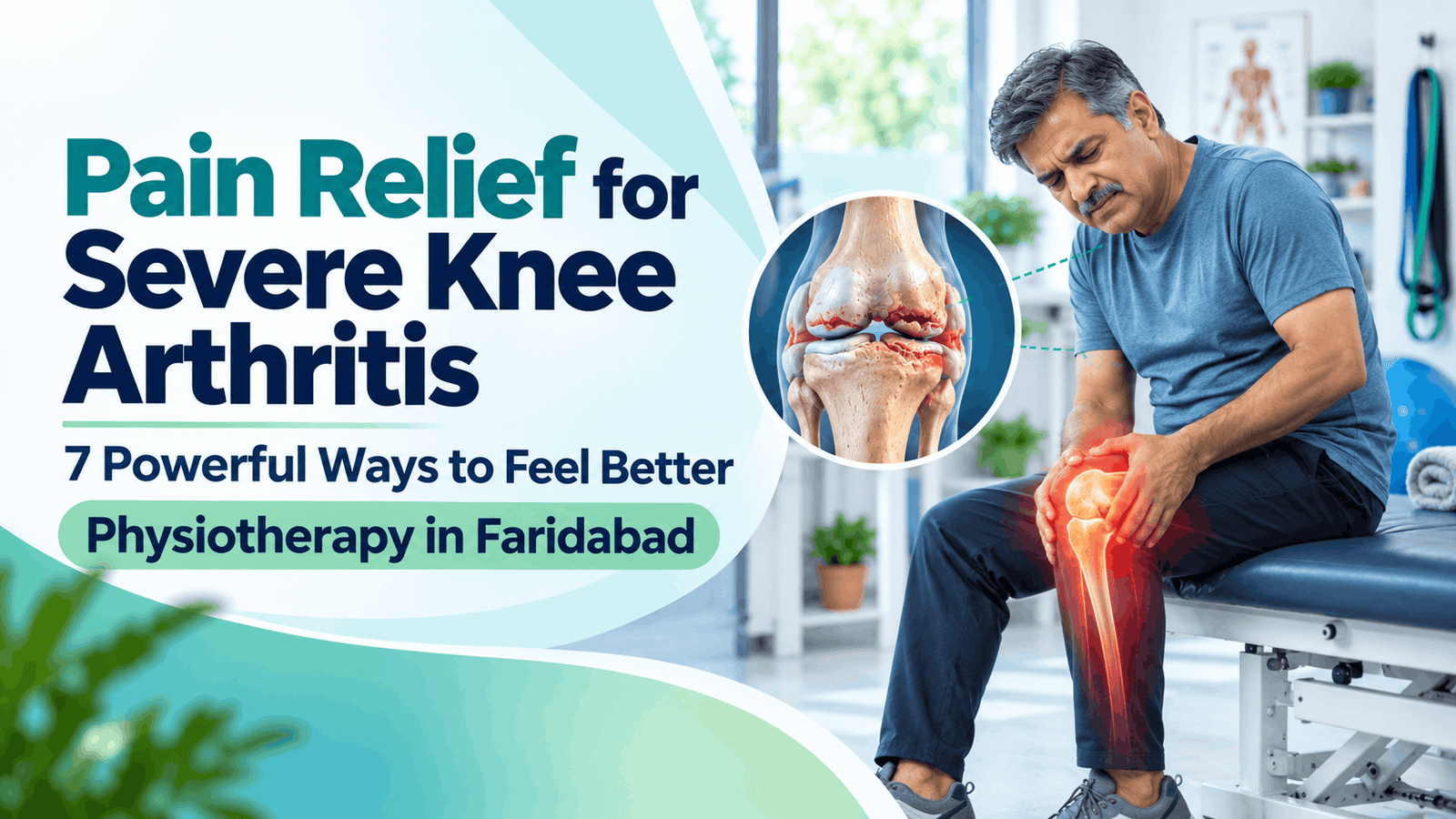
Pain relief for severe knee arthritis starts with understanding what is causing your pain, how much your knee movement is affected and which treatments are suitable for your condition. Severe knee arthritis can make walking, climbing stairs, standing for long periods and even getting out of bed uncomfortable. However, the right combination of medical care, physiotherapy and daily activity management may help reduce symptoms and improve mobility.
At PHYSIOMOTION Physiotherapy & Rehabilitation Clinic, Faridabad, we understand how persistent knee pain can affect everyday life. Whether you experience stiffness in the morning, swelling after walking or difficulty standing from a chair, a personalised treatment plan can help you work towards better movement and function.
In this guide, we explain seven practical approaches to managing severe knee arthritis, when to seek professional help and how physiotherapy may support your recovery.
What Is Severe Knee Arthritis?
Knee arthritis is a condition in which the structures of the knee joint become damaged or inflamed, leading to pain, stiffness and reduced movement. Osteoarthritis is one of the most common forms. It involves changes to the cartilage and other joint structures over time.
As the condition progresses, everyday activities may become increasingly difficult. However, the severity of symptoms does not always correspond directly to what appears on an X-ray. Your symptoms, physical examination and ability to perform daily activities all matter when deciding on treatment.
Common symptoms include:
- Pain while walking, standing or climbing stairs
- Stiffness after sitting or resting
- Swelling around the knee
- Difficulty bending or straightening the leg
- A grinding or clicking sensation during movement
- Reduced walking distance and balance
- Pain that interferes with sleep or daily activities
If knee pain is affecting your independence, an assessment can help identify appropriate treatment options rather than relying on temporary relief alone.
7 Powerful Ways to Get Pain Relief for Severe Knee Arthritis
1. Start With a Proper Knee Assessment
The first step is understanding your individual condition. Knee pain can result from osteoarthritis, an injury, inflammation or other joint problems. These conditions may require different approaches.
A physiotherapist may assess your knee movement, muscle strength, swelling, walking pattern, balance and ability to perform everyday tasks. Your medical history and any previous imaging may also be relevant.
At PHYSIOMOTION, treatment planning focuses on your symptoms, physical capacity and recovery goals. This helps determine which movements and exercises are appropriate for you.
2. Follow a Personalised Physiotherapy Exercise Programme
Appropriately selected exercise is one of the main non-surgical treatments for knee osteoarthritis. Although movement may initially cause some discomfort, a carefully progressed programme can improve muscle strength and physical function over time.
Depending on your condition, a physiotherapist may recommend:
- Quadriceps strengthening
- Gentle knee mobility exercises
- Hamstring strengthening
- Hip and gluteal muscle exercises
- Balance and functional training
- Gradual walking or other low-impact activity
The exercises should match your current ability. If your knee is severely painful or swollen, the programme may need to begin with gentler movements and progress gradually.
Avoid copying intense exercise routines from the internet without checking whether they are suitable for your condition.
3. Manage Body Weight if Appropriate
For people who are overweight, gradual weight loss can help reduce the load placed on the knee joints. Even a modest reduction in body weight may improve mobility and help manage symptoms.
A sustainable approach is generally more useful than crash dieting. Focus on balanced nutrition, appropriate physical activity and realistic goals.
If walking is difficult, a physiotherapist or medical professional can help you identify activities that are more comfortable and suitable for your physical capacity.
4. Modify Activities Without Becoming Completely Inactive
When arthritis pain becomes severe, it is natural to avoid movement. However, prolonged inactivity can contribute to muscle weakness, stiffness and reduced physical capacity.
Instead, adjust activities to your current tolerance.
For example:
- Break long periods of standing into shorter intervals.
- Take regular movement breaks when sitting.
- Use a handrail when climbing stairs.
- Choose comfortable, supportive footwear.
- Avoid repeatedly pushing through sharp or rapidly worsening pain.
- Build activity gradually according to your symptoms.
The goal is to balance activity and recovery rather than stopping all movement.
5. Use Pain-Management Strategies Safely
Pain-management options may include appropriate medication, activity modification and supportive measures recommended by your healthcare professional.
A clinician may discuss topical anti-inflammatory medicines or other treatment options depending on your medical history, other medications and individual risks. Do not start, combine or increase pain medicines without appropriate advice, particularly if you have kidney, stomach or cardiovascular problems.
Heat may help some people with stiffness, while a wrapped cold pack may provide short-term relief for swelling. Protect your skin and avoid applying extreme temperatures directly.
These measures may help manage symptoms, but they do not replace a comprehensive treatment plan.
6. Improve Strength, Balance and Everyday Movement
Severe arthritis can affect more than the knee itself. Pain may change the way you walk, stand or distribute your weight, sometimes placing additional demands on other parts of the body.
Rehabilitation may therefore include hip strengthening, balance exercises, gait training and functional movements such as sitting down and standing up.
Your physiotherapist may also discuss whether a walking aid is appropriate. A walking stick or other support can sometimes make movement safer and more manageable.
At PHYSIOMOTION, our orthopedic rehabilitation services in Faridabad focus on improving movement and function through an individualised rehabilitation approach.
7. Discuss Advanced Treatment Options When Necessary
Exercise and physiotherapy can help manage symptoms, but they are not guaranteed to eliminate pain or reverse advanced joint damage.
If severe pain continues to interfere with sleep, walking or quality of life despite appropriate treatment, consult an orthopaedic specialist about additional options.
Depending on your condition, a specialist may discuss medication, injections in selected cases or knee replacement surgery. The decision should consider your symptoms, examination findings, general health, personal goals and response to non-surgical treatment.
Knee replacement is not automatically necessary simply because an X-ray shows arthritis. Equally, someone should not have to endure disabling symptoms indefinitely without discussing further treatment.
For patients preparing for surgery or recovering afterward, PHYSIOMOTION also provides pre and post-surgery rehabilitation in Faridabad.
Can Physiotherapy Help With Severe Knee Arthritis?
Yes, physiotherapy can be an important part of managing knee osteoarthritis, although the results vary from person to person.
A suitable programme may help improve muscle strength, joint movement, walking ability, balance and confidence during daily activities. Treatment may also include education about activity modification, exercise progression and strategies for managing flare-ups.
Physiotherapy does not regrow lost cartilage or guarantee a pain-free knee. Its purpose is to help you manage symptoms and maintain the best possible level of physical function.
At PHYSIOMOTION Physiotherapy & Rehabilitation Clinic, treatment is planned according to your assessment, symptoms and goals. If you are searching for physiotherapy in Faridabad, our team can help you understand suitable rehabilitation options for your condition.
You can also explore our chronic pain management services for further information about an assessment-led approach to persistent pain.
When Should You Seek Medical Attention?
Do not assume that every episode of knee pain is caused by arthritis.
Seek urgent medical assessment if your knee becomes suddenly very painful, hot, red or significantly swollen, particularly if you also have a fever or feel unwell. These symptoms may indicate an infection or another condition requiring prompt treatment.
You should also seek medical advice after a significant injury, if you cannot bear weight on the leg, or if the knee becomes locked or markedly unstable.
Persistent pain that is getting worse, disturbing your sleep or substantially limiting daily activities also deserves professional assessment.
Where Can You Get Pain Relief for Severe Knee Arthritis in Faridabad?
If arthritis is affecting your ability to walk, work or enjoy everyday activities, a personalised assessment can help you understand your options.
PHYSIOMOTION Physiotherapy & Rehabilitation Clinic provides physiotherapy and rehabilitation in Sector 89, Faridabad. Led by Dr. Deeksha Choudhary, BPT, MPT (Orthopaedics), the clinic focuses on assessment-led care, individualised exercise and functional rehabilitation.
Our approach is designed around your current abilities, symptoms and goals rather than using the same programme for every patient.
Clinic: PHYSIOMOTION Physiotherapy & Rehabilitation Clinic
Address: Shop No. 6, Adore Samriddhi, Piyush Heights, Sector 89, Faridabad, Haryana 121014
Phone: +91 98124 60558
If you are looking for physiotherapy near you in Faridabad, contact the clinic to discuss an assessment and determine whether physiotherapy is appropriate for your condition.
Frequently Asked Questions
What is the best pain relief for severe knee arthritis?
There is no single best treatment for everyone. A combination of tailored exercise, appropriate activity modification, weight management when needed and medically advised pain relief may help. Severe or persistent symptoms should be assessed by a healthcare professional.
Can severe knee arthritis improve without surgery?
Many people manage their symptoms without surgery through exercise, physiotherapy, lifestyle changes and appropriate medical treatment. However, advanced arthritis with persistent disabling symptoms may require a discussion about knee replacement.
Should I walk if I have severe knee arthritis?
Walking may be helpful when it is tolerated, but the distance and intensity should suit your condition. If walking causes substantial pain, marked swelling or instability, seek professional guidance about alternative activities and safe progression.
Which exercises are suitable for severe knee arthritis?
Depending on your symptoms, exercises may include gentle knee mobility, quadriceps strengthening, hip strengthening and low-impact aerobic activity. A physiotherapist can adjust the exercises to your pain level, strength and mobility.
When should I consider knee replacement?
Consider discussing knee replacement with an orthopaedic specialist when pain, stiffness or reduced function substantially affects your quality of life and non-surgical treatments are ineffective or unsuitable. The decision should be made through an individual clinical assessment.
Take the First Step Towards Better Knee Movement
Severe knee arthritis can make everyday life challenging, but appropriate treatment may help you manage pain, maintain strength and move with greater confidence.
The best starting point is to understand your condition and choose a treatment plan that fits your needs. With appropriate medical guidance, personalised physiotherapy and consistent activity management, many people can improve their day-to-day function.
Contact PHYSIOMOTION Physiotherapy & Rehabilitation Clinic in Faridabad to discuss an assessment and explore suitable rehabilitation options.
Medical disclaimer: This article is for educational purposes only and is not a substitute for an individual medical diagnosis or treatment plan.