
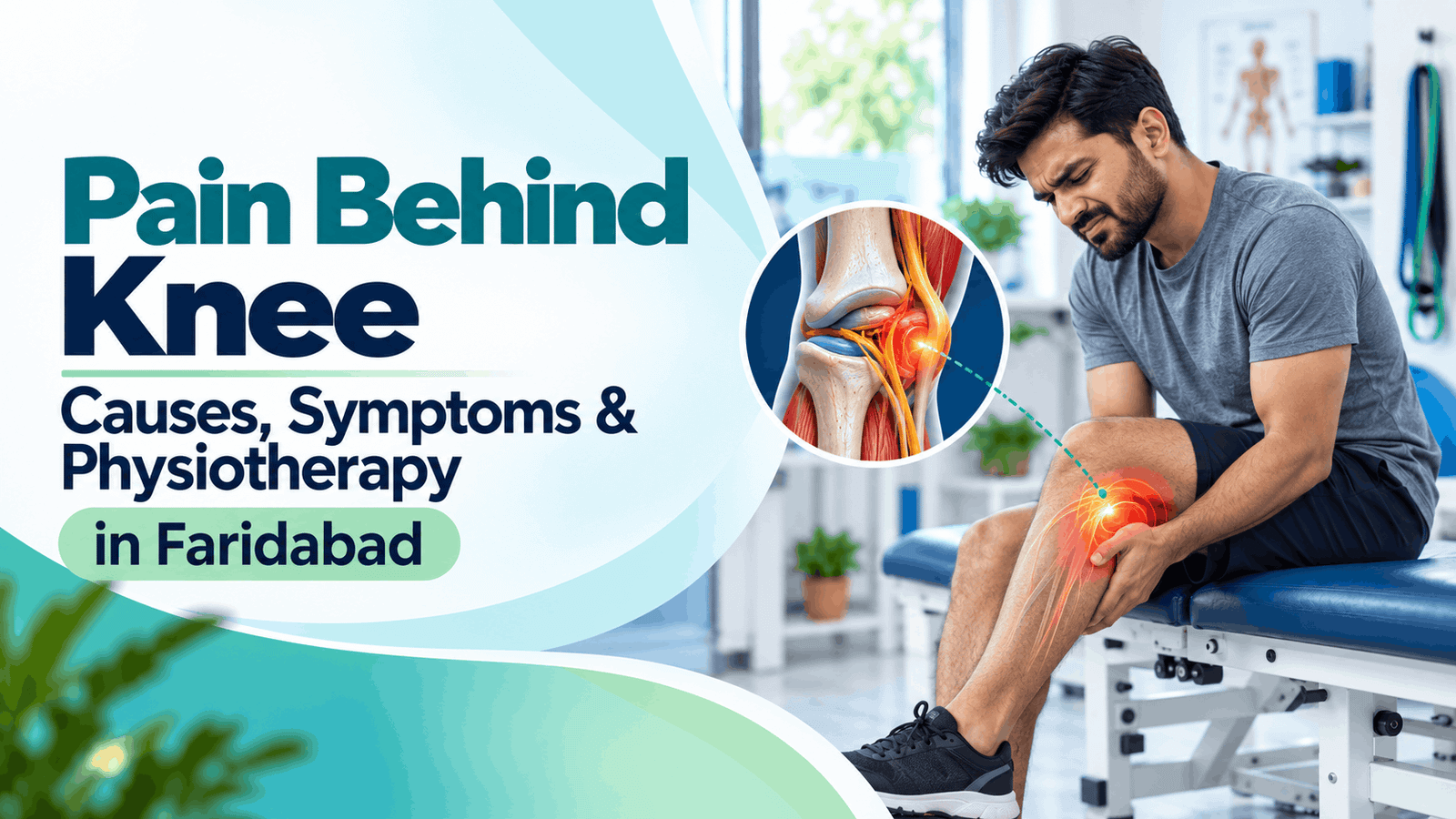
Pain behind knee can develop for many reasons, ranging from muscle or tendon irritation to a Baker’s cyst, arthritis, meniscus injury or other knee problems.
For some people, the discomfort appears only while bending the knee, walking or exercising. Others may notice stiffness, swelling, tightness or a lump behind the knee.
The location of pain can provide useful clues, but pain behind knee should not be diagnosed based on location alone.
Cleveland Clinic notes that common causes of pain at the back of the knee include tendon or ligament injuries, arthritis, Baker’s cysts and tight muscles.
At PhysioMotion Physiotherapy & Rehabilitation Clinic in Faridabad, assessment focuses on the cause of symptoms, knee movement, muscle strength, swelling, walking ability and functional limitations before a rehabilitation plan is selected.
What Does Pain Behind Knee Mean?
The area behind the knee is called the popliteal region.
Several structures pass through or around this area, including:
- Hamstring tendons
- Calf muscles
- Ligaments
- Joint capsule
- Nerves
- Blood vessels
- Bursa and fluid-filled structures
Because multiple structures are located in a small area, pain behind knee can have more than one possible explanation.
The pain may feel:
- Dull or aching
- Tight
- Sharp
- Burning
- Throbbing
- Stiff
- Tender
Some people also experience swelling or difficulty fully straightening or bending the knee.
9 Powerful Causes of Pain Behind Knee
1. Baker’s Cyst
A Baker’s cyst is one of the most recognised causes of pain behind knee.
It is a fluid-filled swelling that develops at the back of the knee, often because another knee problem causes excess joint fluid.
Common underlying problems include:
- Osteoarthritis
- Rheumatoid arthritis
- Meniscus injury
- Other joint irritation
Symptoms may include:
- A lump behind the knee
- Tightness
- Knee pain
- Stiffness
- Difficulty bending
- Swelling
Mayo Clinic explains that Baker’s cysts often occur when knee conditions such as arthritis or cartilage injuries cause excess synovial fluid to collect behind the joint.
Cleveland Clinic similarly notes that these cysts can cause pain, stiffness and reduced knee bending.
2. Hamstring Tendon Irritation
The hamstring muscles run along the back of the thigh and attach close to the knee.
Overuse, sudden loading or repetitive activity may irritate the hamstring tendons.
This may cause:
- Pain behind the knee
- Pain during running
- Pain during bending
- Tightness in the back of the thigh
- Tenderness near the tendon
Athletes, runners and gym-goers may be more likely to notice this type of problem after changes in training load.
For exercise-related knee conditions, patients can explore PhysioMotion’s Sports Injury Rehabilitation in Faridabad service. PhysioMotion’s current programme includes strength, mobility, balance and sport-specific rehabilitation for knee and lower-limb injuries.
3. Meniscus Injury
The menisci are cartilage structures inside the knee that help distribute load and improve joint stability.
A meniscus tear may happen after:
- Twisting
- Sudden direction changes
- Squatting
- Sports injuries
- Degenerative changes
Symptoms can include:
- Knee pain
- Swelling
- Clicking
- Locking
- Difficulty bending
- Pain around the joint line
Depending on the location of the tear, discomfort may be felt toward the back of the knee.
Mayo Clinic lists meniscus tears among injuries that can cause swelling and pain around the knee.
PhysioMotion’s Orthopedic Rehabilitation in Faridabad service includes meniscus problems, knee conditions, joint pain and rehabilitation after meniscus surgery.
4. Knee Osteoarthritis
Osteoarthritis can also cause pain behind knee, especially when joint inflammation or swelling is present.
Knee osteoarthritis occurs when cartilage within the joint gradually deteriorates.
Symptoms may include:
- Knee pain
- Stiffness
- Swelling
- Reduced mobility
- Pain while walking
- Difficulty climbing stairs
Osteoarthritis can also contribute to the development of a Baker’s cyst behind the knee. Cleveland Clinic identifies arthritis as one of the common causes of posterior knee pain and Baker’s cyst formation.
For long-standing joint pain, PhysioMotion offers Chronic Pain Management in Faridabad, which includes persistent knee pain, arthritis and osteoarthritis among the conditions treated.
5. Calf Muscle Strain
The gastrocnemius muscle crosses the back of the knee.
A strain may occur during:
- Running
- Jumping
- Sudden acceleration
- Sports
- Heavy exercise
- Sudden stretching
Pain may be felt in the upper calf and behind the knee.
Symptoms can include:
- Sharp pain
- Tenderness
- Tightness
- Difficulty walking
- Pain when pushing off the foot
A physical examination helps distinguish muscle-related symptoms from joint-related problems.
6. Ligament Injury
Knee ligaments help control stability.
Ligament injuries can occur during:
- Sports
- Falls
- Twisting
- Sudden stops
- Direct impact
Posterior cruciate ligament problems in particular may produce discomfort deeper in the knee or toward the back.
Other symptoms may include:
- Swelling
- Instability
- Difficulty walking
- Reduced range of motion
Sports-related ligament injuries often require structured rehabilitation to restore strength and stability.
PhysioMotion’s Sports Injury Rehabilitation programme includes balance, proprioception, movement correction and progressive strengthening for knee injuries.
7. Tight Calf or Hamstring Muscles
Muscle tightness can sometimes contribute to pain behind knee, particularly after prolonged inactivity, repetitive activity or sudden increases in exercise.
Tightness may make the knee feel:
- Restricted
- Stiff
- Uncomfortable while bending
- Tight while walking
However, simply stretching is not always the answer.
The reason for the tightness should first be considered, especially if symptoms persist or are associated with swelling or weakness.
PhysioMotion’s Musculoskeletal Rehabilitation in Faridabad programme focuses on restoring movement, strength and functional capacity for muscle, joint and soft-tissue conditions.
8. Knee Joint Swelling
Fluid buildup within the knee can create pressure and discomfort toward the back of the joint.
Possible causes include:
- Injury
- Arthritis
- Meniscus tear
- Overuse
- Infection
- Bursitis
Mayo Clinic notes that swollen knees can result from ligament injuries, meniscus tears, overuse, arthritis and other conditions.
A swollen knee should be assessed if the swelling is substantial, persistent or associated with heat, redness or fever.
9. Deep Vein Thrombosis (DVT)
Most pain behind knee is musculoskeletal, but one important condition should not be missed.
Deep vein thrombosis is a blood clot that develops in a deep vein, usually in the leg.
Possible symptoms include:
- Leg pain
- Swelling
- Warmth
- Tenderness
- Skin colour changes
Mayo Clinic explains that DVT can cause leg pain or swelling and may become dangerous if part of the clot travels to the lungs.
This is one reason sudden pain and swelling behind the knee or calf should not automatically be treated as a muscle problem.
Pain Behind Knee When Bending
Pain behind knee when bending can occur with several conditions.
Common possibilities include:
- Baker’s cyst
- Meniscus irritation
- Joint swelling
- Muscle or tendon tightness
- Arthritis
A Baker’s cyst in particular may create a feeling of pressure or tightness when the knee bends fully.
The NHS notes that Baker’s cyst symptoms can include difficulty bending the knee, stiffness and pain that may become worse after walking.
Pain Behind Knee When Straightening the Leg
Some people feel discomfort when fully straightening the knee.
This may happen because extension increases tension or pressure around structures at the back of the knee.
Possible causes include:
- Baker’s cyst
- Hamstring tendon irritation
- Calf muscle problems
- Joint inflammation
- Meniscus injury
Mayo Clinic notes that Baker’s cyst pain may worsen when fully straightening or bending the knee.
Pain Behind Knee When Walking
Pain behind knee while walking can be associated with:
- Arthritis
- Tendon problems
- Baker’s cyst
- Muscle strain
- Joint swelling
The way pain behaves is important.
For example, a physiotherapist may ask whether symptoms appear:
- Immediately
- After several minutes of walking
- While climbing stairs
- When walking downhill
- After prolonged standing
These details can help guide assessment.
Pain Behind Knee With Swelling
Swelling changes the picture.
Pain plus swelling may occur with:
- Baker’s cyst
- Arthritis
- Meniscus injury
- Ligament injury
- Joint irritation
But sudden swelling and pain can also occur with DVT.
Mayo Clinic advises seeking medical care when pain and swelling behind the knee could represent a blood clot.
Pain Behind Knee With a Lump
A lump behind the knee commonly raises suspicion for a Baker’s cyst.
The NHS describes a Baker’s cyst as a soft, fluid-filled lump at the back of the knee.
However, a new unexplained lump should be medically assessed rather than self-diagnosed.
Cleveland Clinic recommends evaluation because other conditions can sometimes cause similar symptoms.
When Is Pain Behind Knee Serious?
Most cases are not emergencies.
However, seek urgent medical attention if pain behind knee occurs with:
- Sudden significant swelling
- Calf swelling
- Warmth or redness
- Severe unexplained pain
- Inability to bear weight
- Significant trauma
- Fever
- Chest pain
- Shortness of breath
The NHS specifically warns that sudden leg swelling, warmth and colour changes may indicate a ruptured Baker’s cyst or DVT, while chest pain or breathlessness with leg symptoms may indicate pulmonary embolism.
Mayo Clinic also identifies DVT as a potentially serious condition because a clot can travel to the lungs.
How Is Pain Behind Knee Diagnosed?
A proper diagnosis begins with assessment.
A physiotherapist or doctor may evaluate:
- Where the pain is located
- When symptoms began
- Swelling
- Knee range of motion
- Muscle strength
- Walking pattern
- Tenderness
- Stability
- Previous injuries
- Clicking or locking
- Functional limitations
Depending on the findings, imaging may sometimes be needed.
For suspected Baker’s cyst or other deeper problems, investigations may include:
- Ultrasound
- X-ray
- MRI
Mayo Clinic notes that Baker’s cyst evaluation can involve ultrasound, X-ray or MRI when necessary.
Can Physiotherapy Help Pain Behind Knee?
Physiotherapy can help many musculoskeletal causes of pain behind knee, but treatment depends on the underlying condition.
A personalised rehabilitation plan may include:
- Pain and swelling management
- Knee mobility exercises
- Hamstring strengthening
- Quadriceps strengthening
- Calf strengthening
- Hip strengthening
- Balance training
- Walking retraining
- Movement correction
- Gradual return to exercise
For example, Cleveland Clinic notes that physical therapy may be recommended for Baker’s cysts associated with arthritis or injury, particularly to strengthen muscles around the knee.
Treatment should not be based solely on where the pain is located.
Physiotherapy for Pain Behind Knee in Faridabad
At PhysioMotion, pain behind knee is assessed according to the patient’s symptoms and movement limitations.
The assessment may consider:
- Knee mobility
- Muscle strength
- Swelling
- Balance
- Walking
- Sports demands
- Daily activities
- Previous injuries
PhysioMotion’s current Orthopedic Rehabilitation in Faridabad service covers knee conditions, arthritis, meniscus problems, ligament injuries and joint stiffness.
PhysioMotion provides individualised physiotherapy in Faridabad led by assessment rather than using one standard treatment routine for every patient.
Pain Behind Knee After Exercise or Sports
Athletes commonly experience posterior knee discomfort after:
- Running
- Squats
- Lunges
- Jumping
- Sprinting
- Sudden direction changes
Possible causes may include muscle strain, tendon irritation, ligament problems or meniscus injury.
The correct response is not always complete rest.
Depending on the injury, rehabilitation may involve temporarily reducing aggravating load and gradually rebuilding:
- Strength
- Mobility
- Balance
- Control
- Running tolerance
- Sport-specific capacity
PhysioMotion’s Sports Injury Rehabilitation in Faridabad programme is designed around these goals.
Pain Behind Knee After Knee Replacement
Some people may experience stiffness, swelling or discomfort during recovery after a knee operation.
Post-operative symptoms need to be interpreted according to:
- Stage of healing
- Surgical procedure
- Swelling
- Range of motion
- Muscle strength
- Surgeon instructions
PhysioMotion’s current post-surgery programme specifically includes total knee replacement, meniscus repair, ligament reconstruction and other orthopedic procedures.
Pain Behind Knee in Older Adults
In older adults, pain behind knee may be associated with:
- Osteoarthritis
- Reduced joint mobility
- Baker’s cyst
- Muscle weakness
- Reduced activity
Rehabilitation may therefore need to address more than pain alone.
Treatment may include:
- Strengthening
- Balance training
- Walking training
- Mobility
- Functional exercises
PhysioMotion’s Geriatric Rehabilitation in Faridabad programme focuses on mobility, strength, balance, walking and functional independence in older adults.
Frequently Asked Questions About Pain Behind Knee
What is the most common cause of pain behind knee?
There is no single cause. Baker’s cyst, arthritis, tendon or muscle problems and knee injuries are common possibilities.
Can a Baker’s cyst cause pain behind knee?
Yes. A Baker’s cyst develops behind the knee and can cause pain, swelling, tightness and stiffness.
Why does the back of my knee hurt when I bend it?
Possible causes include Baker’s cyst, meniscus problems, joint swelling, muscle tightness or tendon irritation.
Can arthritis cause pain behind knee?
Yes. Knee arthritis can cause joint pain and swelling and can also contribute to the development of a Baker’s cyst.
Can a meniscus tear cause posterior knee pain?
A meniscus injury can cause knee pain, swelling, clicking or locking, and some tears may produce discomfort toward the back of the knee.
When should I worry about pain behind knee?
Seek prompt medical assessment if there is sudden swelling, warmth, redness, severe calf pain or unexplained symptoms. Chest pain or difficulty breathing with leg pain or swelling requires emergency medical attention because of possible pulmonary embolism.
Can physiotherapy help pain behind knee?
Yes, when the cause is musculoskeletal and physiotherapy is appropriate. Treatment may include mobility, strengthening, balance, activity modification and functional rehabilitation.
Where can I get physiotherapy for pain behind knee in Faridabad?
PhysioMotion Physiotherapy & Rehabilitation Clinic provides assessment-led orthopedic, musculoskeletal, sports injury and pain rehabilitation in Sector 89, Faridabad.
Get Pain Behind Knee Assessed at PhysioMotion
Persistent pain behind knee should not automatically be treated as simple muscle tightness.
The correct approach depends on whether symptoms originate from a muscle or tendon, the knee joint, a Baker’s cyst, arthritis, meniscus injury or another condition.
At PhysioMotion Physiotherapy & Rehabilitation Clinic, assessment focuses on pain, knee movement, strength, swelling, balance, walking and functional limitations before deciding on an appropriate rehabilitation plan.
You can read patient experiences on the PhysioMotion Reviews page or contact the clinic to book an assessment in Faridabad.
Reviews:
https://physiomotionrehab.com/reviews/
Contact:
https://physiomotionrehab.com/contact-us/
This article is educational and does not replace individual medical diagnosis or emergency medical care.