
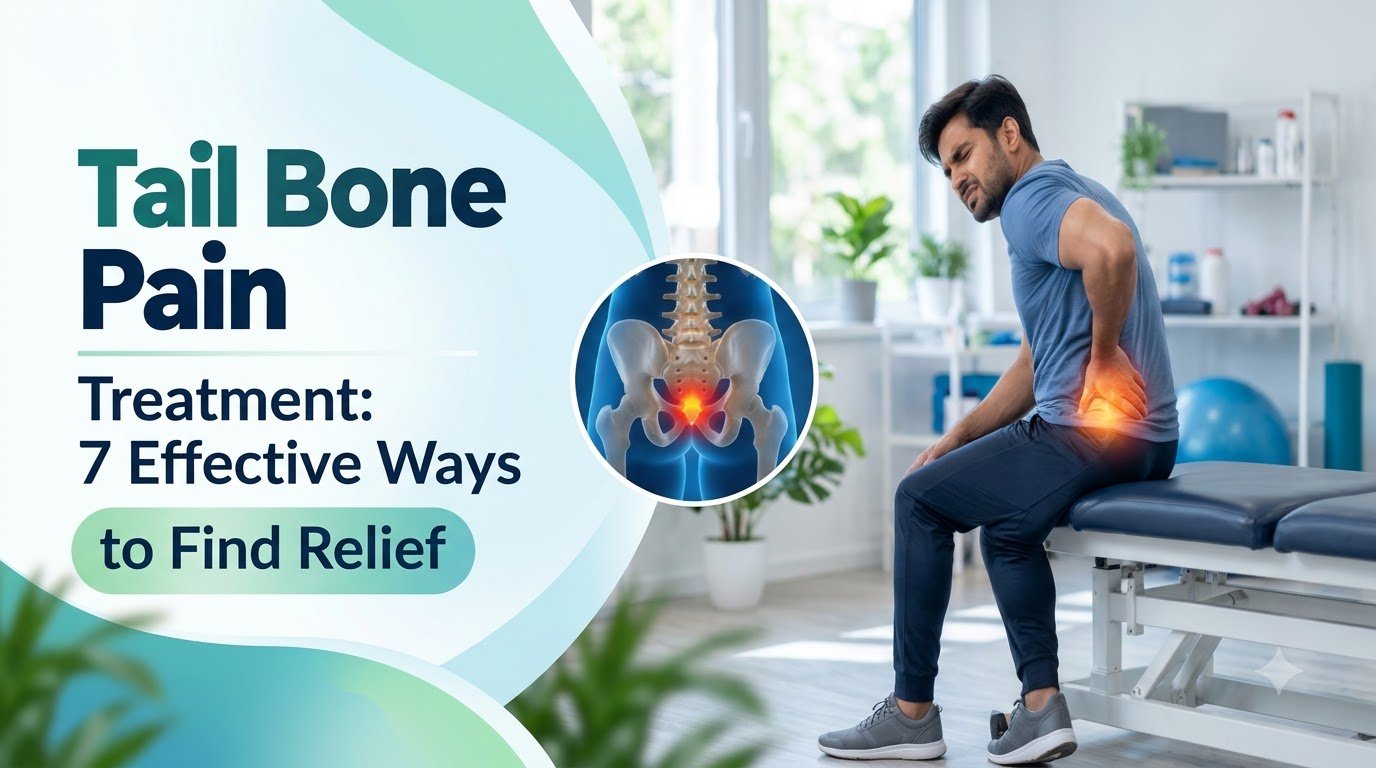
Tail bone pain treatment starts with understanding why the small bone at the base of your spine hurts, what is putting pressure on it, and how to calm it down safely. If sitting on an office chair, a sofa or a bike seat has become painful, you are not alone. Many people in Faridabad and Delhi NCR deal with this problem every day.
In this guide, I (Dr. Deeksha Choudhary, physiotherapist at PhysioMotion) will explain the causes, share 7 proven ways to find relief, and tell you when it is time to see an expert.
What Is Tail Bone Pain (Coccydynia)?
The tailbone, or coccyx, is the small triangular bone at the very bottom of your spine. Pain in this area is medically called coccydynia. According to the University of Maryland Medical System, it can interfere with daily activities such as driving, and it often feels worse when you sit for long periods or stand up from a seated position.
The pain may feel dull, sharp or achy. Some people also feel pressure near the buttocks or muscle tightness in the lower back and pelvis.
Common Causes: Why You May Need Tail Bone Pain Treatment
Knowing the cause makes recovery faster. These are the most common triggers I see in my clinic:
- A fall or direct blow while landing on your buttocks.
- Prolonged sitting on hard surfaces or in a slouched posture.
- Childbirth, which stresses the ligaments around the coccyx.
- Tight pelvic floor muscles pulling on the tailbone.
- Arthritis or a bone spur in the coccyx area.
- Sudden weight changes that alter how you sit.
Sometimes no clear cause is found. That is exactly why a proper physical assessment matters before starting any plan.
7 Proven Ways: Tail Bone Pain Treatment That Works
Most cases improve with simple, conservative care. Here is the step-by-step tail bone pain treatment approach I recommend.
1. Fix Your Sitting Posture First
Lean slightly forward and let your weight rest on your sit bones (the hip bones), not on your tailbone. Keep your feet flat and your knees slightly below your hips. This one change often reduces pain within days.
2. Use a Wedge or U-Shaped Cushion
A cushion with a cut-out relieves direct pressure on the coccyx. This is a core part of any home-based tail bone pain treatment plan, especially if you work a desk job in Gurugram, Noida or Delhi and sit for hours.
3. Try Heat and Cold Therapy
Use an ice pack for 10 to 15 minutes in the first few days after an injury. Later, a warm compress can relax tight muscles. Always keep a cloth between your skin and the pack.
4. Get Hands-On Manual Therapy
Gentle soft-tissue release of the gluteal and pelvic muscles can ease the pull on the coccyx. A trained physiotherapist chooses the technique based on your assessment. You can learn more about our approach on the musculoskeletal rehabilitation in Faridabad page.
5. Do Gentle Stretching and Mobility Work
Stretching the hips, hamstrings and lower back improves how your pelvis moves. Start slowly and stop if the pain increases.
Simple tail bone pain treatment exercises to start at home
- Knee-to-chest stretch: hold for 20 to 30 seconds, 3 times per side.
- Pelvic tilts: lie on your back and gently flatten your lower back, 10 repetitions.
- Child’s pose: relax the hips and lower back for 30 seconds.
- Glute bridges: lift hips slowly, 8 to 10 repetitions, only if pain-free.
6. Strengthen Your Core and Glutes
Strong muscles share the load and protect the tailbone during sitting, walking and lifting, so strengthening is a key part of long-term tail bone pain treatment. Progress should be gradual, which is why our spinal rehabilitation in Faridabad programmes are built around your pain level.
7. Consider Medical Options When Needed
If pain continues, a doctor may suggest anti-inflammatory medicine or an injection. Surgery is rarely needed and is only considered when other options have not worked. Our chronic pain management in Faridabad service supports people with long-standing symptoms.
When Should You See a Doctor?
Most tailbone pain settles within weeks to a few months. Get checked sooner if you notice any of these:
- Pain lasting more than 2 months or getting worse.
- Fever, chills, redness or swelling near the tailbone.
- Numbness, tingling or leg weakness.
- Loss of bladder or bowel control (seek emergency care).
For general guidance on spine-related pain, the NHS back pain guide and the World Health Organization low back pain fact sheet are helpful reading.
Tail Bone Pain Treatment in Faridabad and Delhi NCR at PhysioMotion
At PhysioMotion, every plan begins with a detailed assessment, not guesswork. We look at your posture, pelvic movement, muscle tightness and daily habits, then build a personalised programme of manual therapy, education and progressive exercise.
Our clinic is in Sector 89, Faridabad, and many patients also travel from Delhi, Ballabhgarh and Greater Faridabad. You can read real patient reviews, meet Dr. Deeksha Choudhary or explore our orthopedic rehabilitation in Faridabad care.
Related Reads From Our Blog
- Plantar Fasciitis Treatment: 7 Proven Ways to Relieve Heel Pain
- Neck Pain Causes: 9 Common Triggers & Physiotherapy in Faridabad
- Pain Relief for Severe Knee Arthritis: 7 Powerful Ways
Frequently Asked Questions About Tail Bone Pain Treatment
How long does tail bone pain take to heal?
Mild cases often settle in a few weeks, while some take a few months. Early posture correction and physiotherapy can shorten recovery.
Can physiotherapy help tailbone pain?
Yes. Physiotherapy reduces muscle tension, improves posture and strengthens supporting muscles, which lowers stress on the coccyx.
Is walking good for tailbone pain?
Gentle walking is usually fine and helps circulation. Avoid long hours of sitting and stop any activity that sharply increases pain.
Book Your Assessment Today
Do not let tailbone pain control your day. The right tail bone pain treatment can get you back to comfortable sitting. Call +91 98124 60558 or BOOK YOUR APPOINTMENT, and let us help you sit, walk and move comfortably again.
Disclaimer: This article is for education only and does not replace an individual medical assessment.

[…] reading: tail bone pain treatment, plantar fasciitis treatment and more on our physiotherapy […]